
Direct answer
Clearing a basement or cellar in London typically costs about £350 to £800: a volume price based on our van-load table, plus an allowance of about 20% to 40% for labour where there are steep stairs, poor light and a long carry. Those are indicative ranges, not a fixed rate card: a licensed carrier quotes the real price for your space.
Contents
- What basement and cellar clearance costs in London
- Why basements are harder
- Two worked examples of how a basement quote builds up
- Types of basement and cellar, and why they differ
- Safety in a cellar clearance
- Hazards commonly found in basements
- Heavy materials: rubble, soil and building waste
- Damp, flooding and mould
- Access, parking and the carry to the vehicle
- Why people clear a basement
- What is usually down there, and what to do with it
- A step-by-step plan for a basement clearance
- Common mistakes with basement clearances
- After the clearance: what to do with the empty space
- Comparing basement quotes
- Disposal and duty of care
- Related guides
- How to prepare a basement clearance
- How the process works, start to finish
- Frequently asked questions
What basement and cellar clearance costs in London
Volume price plus a labour allowance.
A basement or cellar is priced like any clearance by volume, with an extra allowance because the work is harder. Our prices page publishes the van-load table that the volume part is based on. On top of that, carriers commonly allow an extra 20% to 40% for labour where there are steep stairs, poor light and a long carry to the vehicle.
| Item | Indicative figure |
|---|---|
| Typical basement or cellar clearance | £350 – £800 |
| Labour allowance for stairs, low light and long carries | +20% to 40% on the volume price |
| Stairs without a lift (from /prices/) | +£30 – £60 per flight |
These are indicative planning ranges, not a promise of a price. A quarter-full cellar with a straight stair is at the low end, and a full basement with damp contents is at the high end.
Why basements are harder
Access, light and condition.
- Steep or narrow stairs. Every item has to be carried up by hand.
- Light and ventilation. Poor lighting and air slow the work and may need extra equipment.
- Damp and mould. Wet or mouldy items are heavier and messier. Tell the carrier.
- Hazards. Paint, chemicals, gas bottles and possible asbestos need separate handling. See our paint, gas bottle and asbestos guides.
- Distance to the vehicle. A long carry from the door increases the time.
Two worked examples of how a basement quote builds up
Illustrative arithmetic from published figures, not real customer jobs.
The cost of a basement clearance comes from a volume price on the van-load table, plus an allowance for the harder labour. The examples below are made-up planning scenarios, not real jobs and not quotes. They apply the 20% to 40% labour allowance described above to figures on our prices page. Carriers are independent businesses, set their own prices and may handle the allowance differently, so treat the totals as a sense-check only.
Example A: a half-full cellar with a straight staircase
Suppose a cellar holds about half a van of boxes, old furniture and bags, reached by one straight flight. A half-van load is £275 to £345 on the van-load table. A 20% to 40% labour allowance takes that to roughly £330 to £483. Stairs without a lift are noted on the prices page at about £30 to £60 per flight, and some carriers fold that into the labour allowance rather than adding it separately, so ask which approach is used.
Example B: a damp basement with three-quarters of a van of contents
Suppose a lower-ground-floor storage space holds three-quarters of a van of mixed contents, some of it damp, reached by a steep and narrow staircase. A three-quarter van load is £425 to £495. With the 20% to 40% allowance, the total is roughly £510 to £693. Adding one flight at £30 to £60 if charged separately gives about £540 to £753. A full van load of £575 to £695 with the same allowance would be £690 to £973, which is above the typical £350 to £800 range and shows why a full basement can exceed it.
| Scenario | Volume price (van-load table) | With 20% to 40% labour allowance |
|---|---|---|
| Half van (8 cubic yards) | £275 – £345 | £330 – £483 |
| Three-quarter van (12 cubic yards) | £425 – £495 | £510 – £693 |
| Full van (16 cubic yards) | £575 – £695 | £690 – £973 |
Heavy materials such as soil or rubble are priced by weight instead, as covered below, and hazardous items carry their own charges.
Types of basement and cellar, and why they differ
Not every lower level is the same job.
- Converted lower-ground floors. Often used as storage, a spare room or a flat. Wider stairs and better light make them easier than traditional cellars.
- Victorian and Georgian cellars. Low ceilings, narrow steps and uneven floors are common, and damp is a frequent issue. Large items may not fit up the stairs.
- Coal holes and vaults. Small spaces under pavements or front steps. Access may be through a hatch or a narrow door, and light is limited.
- Communal basements. Shared storage in a block or HMO may contain items from several people, which raises questions about ownership. Check with the managing agent first.
- Basements with outside access. A separate entrance or lightwell stairs can make loading simpler than carrying through the house.
Describe which type you have when you post, and add photographs of the stairs and the door, because the way in is as important as what is inside.
Safety in a cellar clearance
Lighting, air, trip hazards and heavy lifting.
Cellars are among the less comfortable clearance environments, and a few precautions matter for you and the crew. The points below are practical guidance, not a health and safety assessment, and carriers will apply their own working practices.
- Lighting. Make sure stairs and the main area are lit. A torch is not enough for moving heavy items.
- Trip hazards. Clear boxes and cables from the route to the stairs. Loose items on steps are a common cause of falls.
- Ventilation. Stale air, damp and mould spores can irritate breathing. Tell the carrier if there is visible mould or a musty smell.
- Heavy lifting. Items carried up steep steps are harder to handle. Do not attempt heavy furniture alone.
- Water and electrics. If the space has flooded or has exposed wiring, say so, and do not use electrical equipment in wet conditions.
- Pests. Droppings or nests should be reported so the crew can wear suitable protection.
The prices page explains that hazardous or contaminated work needs specialist protective equipment and carries an additional service factor of +50% to +100% on standard labour rates. A cellar with serious contamination or hoarded contents may fall into that category.
Hazards commonly found in basements
Flag them before the carrier arrives.
Basements often hold what was too awkward to put elsewhere, including tins of paint, old chemicals, gas bottles and building materials. Tell the carrier about anything of this kind so that the quote and the vehicle are right. Published surcharges on the prices page include:
- Paint cans (liquid or wet paint): £10 to £25 per tin. See the paint disposal guide.
- Gas canisters or cylinders, empty or full: £45 to £85 each. See the gas bottle guide.
- Fluorescent lighting tubes: £4 to £8 per tube.
- Car tyres: £12 to £22 each.
- Old fridges and freezers: £45 to £190 depending on type, as covered in the fridge freezer guide.
- Small electronics: £10 to £20 per unit.
If you see old pipe lagging, ceiling tiles, insulation board or sprayed coatings and are not sure what they are, do not break or disturb them. Our asbestos removal cost guide explains what to do, and the hazardous household waste guide covers other items.
Heavy materials: rubble, soil and building waste
Weight, not volume, sets the price.
Basements are sometimes where building work leaves its leftovers, or where a conversion project is being prepared. Our prices page notes that dense waste is priced strictly by weight, because a vehicle reaches its legal capacity long before it looks full.
| Material | Unit | Indicative price |
|---|---|---|
| Inert builders waste (brick, concrete, stone) | Per tonne | £180 – £260 |
| Soil, clean earth, clay | Per tonne | £190 – £280 |
| Plasterboard and gypsum products | Per tonne | £240 – £360 |
| Mixed construction or renovation waste | Per tonne | £220 – £320 |
Rubble carried up basement stairs is slow and heavy, so expect the labour allowance to matter. For larger amounts, a skip or a dedicated builders waste service may be better value. See our bricks and rubble guide and skip hire price guide.
Damp, flooding and mould
Wet contents are heavier and messier.
Basements are more prone to damp than other parts of a house, and stored items often absorb it. Cardboard boxes slump, upholstery rots and wood swells. All of that adds weight and makes carrying harder. If the space has flooded in the past, or still has standing water, say so when you post, because carriers need to prepare for it.
- Do not move items you suspect are contaminated with sewage, and tell the carrier.
- Photograph visible mould and any tide marks on walls.
- Dry out what you can before the day, since lighter items cost less to carry.
- Clearing the contents is not a damp fix. You may need a surveyor or specialist to deal with the cause.
Once the basement is empty you can see the walls and floor, which helps if you are planning repairs or a conversion. A clear room is also easier to inspect for the source of damp.
Access, parking and the carry to the vehicle
Distance from cellar to van drives much of the time.
- Stairs. The prices page notes typically £30 to £60 per flight without a lift. Basement stairs are often steep and may count as more than one.
- Doorways and turns. Measure the narrowest points. Large items that went in before the stairs were fitted may not come out in one piece.
- Lightwells and outside steps. An external stairway can be quicker than going through the house, but it may be narrow or slippery in wet weather.
- Parking. Where a vehicle must park in a controlled zone, a visitor permit or council suspension fee of £35 to £90 per day may apply, depending on the borough.
- Congestion Charge. The standard charge is £18 where it applies, and whether it affects the price depends on the vehicle and route.
- Protecting the house. Say whether carpets, hallways or neighbours' shared stairs need protection.
A sketch or a short video of the route from the basement to the street is the most useful thing you can send.
Why people clear a basement
Purpose shapes how you sort.
- Conversion or renovation. The space needs to be empty before work starts. Allow time for rubble and dense waste.
- Selling or letting. A clear basement is easier to show. See the house clearance checklist.
- Water damage. Wet contents must go quickly to avoid mould spreading.
- Probate or bereavement. A basement may hold decades of belongings. See the probate guide.
- Landlords. A shared cellar in a rented house may hold tenants' belongings. See the landlord and HMO guide.
Whatever the reason, the carrier needs the same information: what is there, how much, how it gets out and what condition it is in.
What is usually down there, and what to do with it
Stored items fall into a few groups.
| Item type | What to do | Where to read more |
|---|---|---|
| Boxes of papers and documents | Sort first, shred or keep personal and financial papers, and check for damp damage | House clearance checklist |
| Old furniture and mattresses | Sell, donate if clean and labelled, or include in the job | Furniture donation guide |
| Bikes, tools and garden equipment | Sell or give away if working, otherwise list for disposal | Garage clearance guide |
| Paint, solvents and fuels | Do not pour away or mix; list separately for the carrier | Paint disposal guide |
| Old appliances | Disconnect, empty and defrost where relevant | Fridge freezer guide |
| Building offcuts and rubble | Separate from household items because they are priced by weight | Bricks and rubble guide |
Sorting before the day is the cheapest way to reduce cost. Anything you sell, donate or take yourself does not need removal, and a half-van load is noticeably cheaper than three-quarters on the van-load table. Our storage unit clearance cost guide covers similar sorting problems in other spaces.
A step-by-step plan for a basement clearance
Working in this order saves handling things twice.
- Step 1: Survey. Walk the space with a torch and a phone camera. Photograph each wall, the stairs and the exit route.
- Step 2: Identify hazards. Separate or flag paint, gas, chemicals and anything you suspect could be asbestos.
- Step 3: Remove what you are keeping. Carry valuables and papers upstairs or to another room before the crew arrives.
- Step 4: Decide what can be reused. Arrange sales and donations while you still have time.
- Step 5: Post the job. Describe volume, stairs, light, damp and hazards, and attach photos.
- Step 6: Compare quotes. Check scope, labour allowance and paperwork. See the comparison table above.
- Step 7: Prepare the route. Clear the stairs, light the area and arrange parking.
- Step 8: On the day. Walk through with the crew, agree any change to scope and collect the invoice and waste transfer note.
If you are clearing before a conversion or a sale, keep the receipts with the project paperwork.
Common mistakes with basement clearances
Most are about information, not effort.
- Describing the contents but not the stairs, so the quote ignores the hardest part.
- Forgetting to mention damp, which makes items heavier.
- Moving hazardous items or suspected asbestos before anyone has assessed them.
- Mixing rubble with household waste, which changes how the load is priced.
- Leaving valuables and papers in boxes on the day.
- Not checking whether stored items belong to someone else, such as other tenants.
- Picking a carrier on price alone without confirming they are registered.
Photographs and a clear note on access prevent nearly all of these.
After the clearance: what to do with the empty space
An empty basement is a chance to check the building.
Once the contents have gone, take photos of the walls, floor and ceiling. This gives you a record if you are about to sell or let the property, and it helps if you need a surveyor or builder to look at damp or structural questions. Check for signs of leaks, cracks or past flooding, and make a note of any plumbing or electrical items you want inspected.
If you plan to store things again, consider shelving, sealed plastic boxes and keeping items off the floor to reduce the risk of damp damage. If the space is going to be used as living space, check what planning and building control requirements apply with your council, because rules for habitable basements are not covered in this guide.
Comparing basement quotes
The labour allowance is where quotes differ most.
| Check | What to look for |
|---|---|
| Volume | The load size the carrier has assumed, such as half or three-quarters of a van |
| Labour allowance | Whether stairs and long carries are in the headline price or added |
| Hazards | Paint, gas bottles and anything suspected of being asbestos listed separately |
| Damp contents | Whether wet items have been assumed |
| VAT | Whether it applies, since carriers are independent |
| Paperwork | Invoice and waste transfer note provided |
Our licensed company guide explains registration checks. You have no obligation to accept any quote.
Disposal and duty of care
Make sure the waste goes where it should.
Use a carrier registered to carry waste and check the number on the government register. Waste dumped by an unregistered operator can be traced back to the household, and fly-tipping is a recognised problem described in the Fly-tipping overview. Keep the invoice and a waste transfer note. Our waste transfer notes guide explains what each should show.
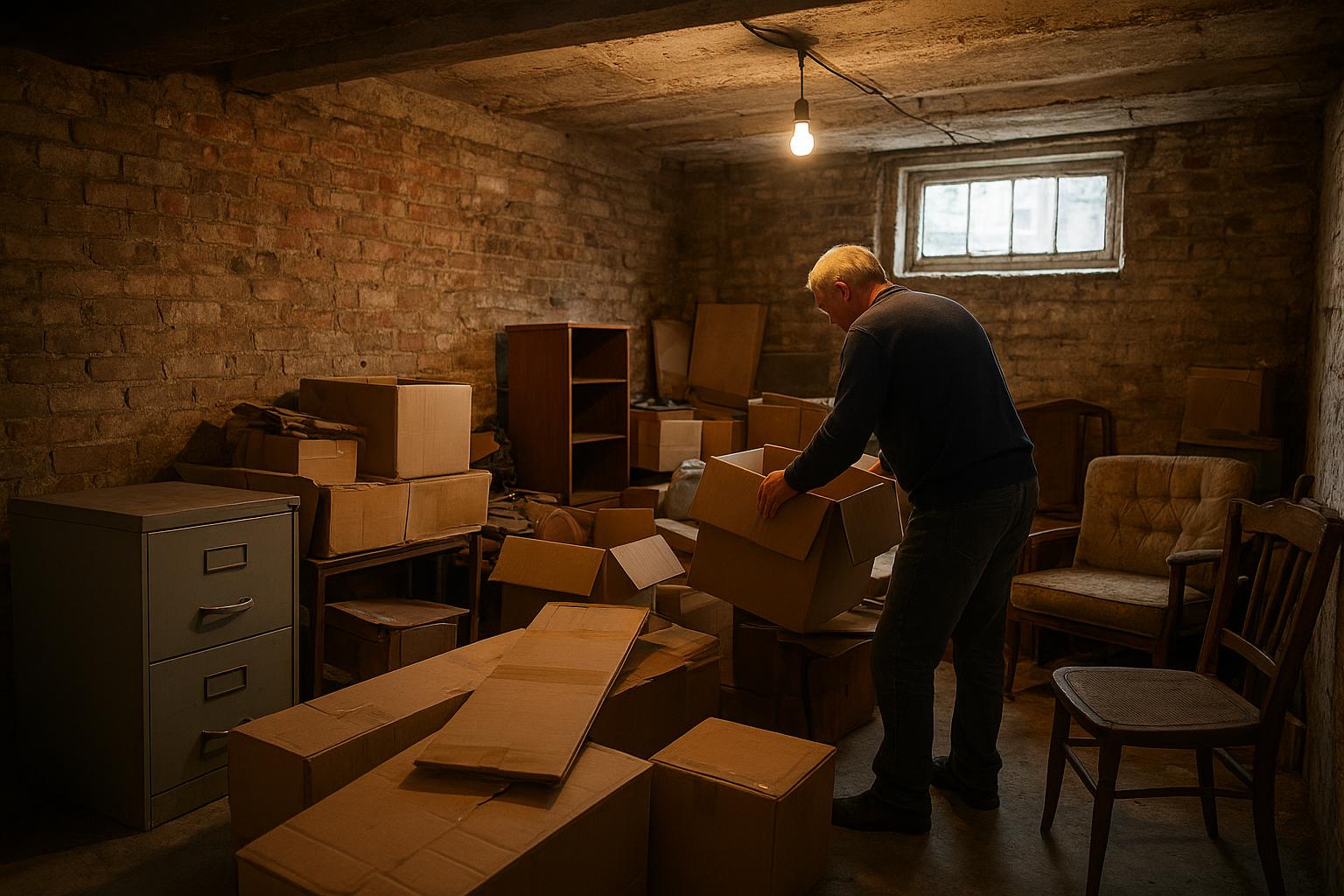
How to prepare a basement clearance
Safety first.
- Photograph the space and the stairs.
- Make sure there is safe lighting on the stairs and in the room.
- Do not move items you suspect contain asbestos or hazardous liquids, and say so.
- Check for pests, damp and flood history, and tell the carrier.

How the process works, start to finish
Three steps from description to collection.
Describe the job
Say what is in the basement and its condition, roughly how much there is and anything you want to keep.
Add access and timing
Mention the stairs, lighting, damp, hazards and where a vehicle can park.
Get a carrier quote
Post the job, compare licensed carriers' quotes and choose, with no obligation to accept.
Frequently asked questions
How much does a basement clearance cost in London?
Indicatively £350 to £800, depending on volume and access. The real price is the quote you receive.
Why is it more expensive than a ground-floor room?
Steep stairs, poor light and a long carry make it harder, so carriers often add about 20% to 40% for labour.
Can you clear a damp or flooded cellar?
Often yes, but say so when you post, because wet items are heavier and may need extra care.
What about hazardous items?
Paint, chemicals, gas bottles and possible asbestos need separate handling, so flag them when you post.
Do stairs add to the price?
Our prices page notes typically £30 to £60 per flight where there is no lift.
Can everything be taken in one visit?
Usually, if the carrier knows the volume and access. Photos help.
Can a basement with a low ceiling be cleared?
Yes, but tell the carrier the ceiling height and the stair dimensions, because crews need to know how large items will come out.
What if I think there is asbestos?
Do not disturb it. Say so in your post and read our asbestos removal cost guide.
Is rubble priced differently?
Yes. Dense materials are priced by weight, from £180 to £280 per tonne on the published table.
How long does a basement clearance take?
It depends on volume and access. The published times start at 30 to 45 minutes for a small load and run to several hours for a full house, and basements usually take longer for the same volume.
Do I need to move things upstairs first?
No, but it can reduce cost if you carry light items to the ground floor beforehand, as long as you do so safely.
Will the carrier fix the damp?
No. Clearance only removes the contents. A surveyor or damp specialist deals with the cause.
Ready to see your price?
Post your basement or cellar clearance for licensed carriers to quote on.