
Direct answer
A small mixed hazardous household collection in London typically costs about £80 to £150 as a base charge, covering things like household chemicals, batteries, fluorescent lamps and small electronics. Per-item disposal figures for paint, gas cylinders and tyres are on /prices/. Those are indicative ranges, not a fixed rate card, and a licensed carrier quotes the real price for your list.
Contents
- What hazardous household waste removal costs in London
- What counts as hazardous household waste
- Your options: take-back, council sites or a carrier
- Preparing hazardous waste for collection
- Licences and duty of care
- Worked examples: pricing a mixed hazardous collection
- Per-item disposal figures at a glance
- Why hazardous waste cannot go in the normal bin
- Safe handling before the carrier arrives
- Common items in detail
- London considerations
- Household waste versus business waste
- Common mistakes to avoid
- Hazardous waste checklist
- Comparing quotes for hazardous collections
- Related guides
- How the process works, start to finish
- Frequently asked questions
What hazardous household waste removal costs in London
A base charge for a small mixed collection, plus per-item figures.
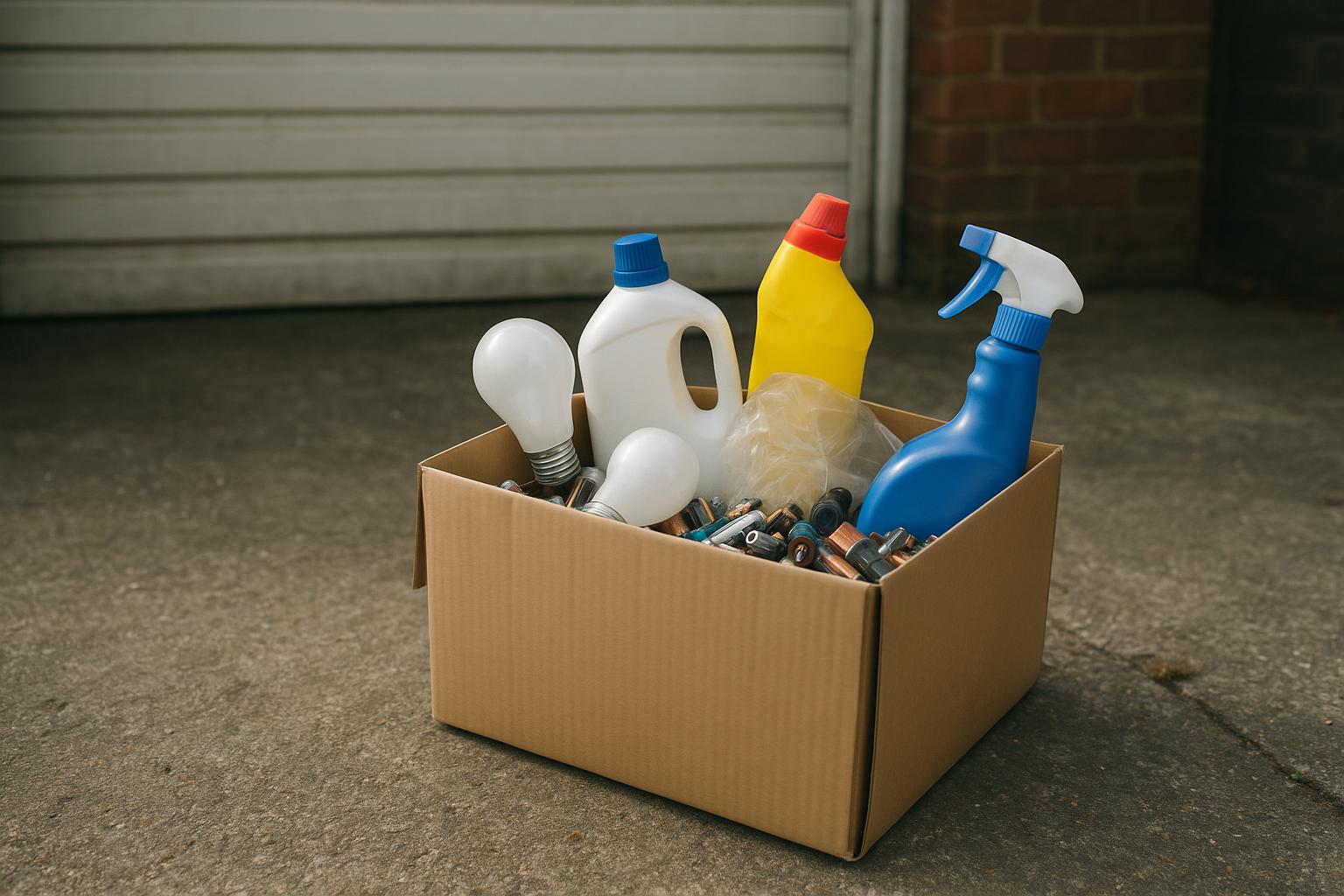
Hazardous household waste is the mixed collection of things that cannot go in ordinary rubbish: household chemicals, batteries, fluorescent lamps, small electronics, aerosols and similar items. Because it has to be sorted, packed safely and taken to sites permitted to accept it, carriers usually charge a base fee for the collection and handling, and some items carry their own disposal charge.
| Item or job | Indicative cost |
|---|---|
| Small mixed collection (electronics, household chemicals, batteries, fluorescent lamps) | £80 – £150 base charge |
| Wet paint, per tin (from /prices/) | £10 – £25 per tin |
| Gas canister or cylinder, empty or full (from /prices/) | £45 – £85 each |
| Car tyre (from /prices/) | £12 – £22 each |
These are indicative planning figures, not a rate card. The base charge is for a small volume; a larger or more varied collection costs more, and the real price is whatever the carriers quote after seeing your list. Our prices page shows the per-item disposal figures.
What counts as hazardous household waste
The common items, and why each needs separate handling.
- Household chemicals. Bleach, oven and drain cleaners, pesticides, weedkillers, white spirit, thinners and similar products. They can be corrosive, toxic or flammable and should never be mixed or poured down a drain.
- Batteries. Lithium-ion and other rechargeable batteries can start fires if crushed or damaged in a bin lorry. Keep them separate and ideally taped at the terminals.
- Fluorescent tubes and low-energy lamps. They contain small amounts of mercury and should be taken whole, not broken.
- Small electronics and cables. Covered by the waste electrical rules and not allowed in the normal bin. See our electronic waste and WEEE service and the TV removal and disposal guide.
- Aerosols, paint, gas cylinders and tyres. Each has its own handling rules. See our guides to paint and liquid waste and gas bottles and cylinders.
Asbestos is a separate and more serious case and is never part of a normal household hazardous collection. See our asbestos removal cost guide if you suspect it.
Your options: take-back, council sites or a carrier
Which route suits which item.
- Retailer take-back. Shops that sell batteries usually have to accept used ones, and retailers selling new electrical items often take back old ones. Ask before you pay to dispose of them.
- Household recycling centres. Many London sites accept household chemicals, batteries, lamps and small electronics in household quantities, usually with limits and proof-of-address rules. Check your council's website for what is accepted. Our tip runs guide explains what to expect.
- Council special collections. Some councils collect certain hazardous items by arrangement.
- Private carrier. A licensed waste carrier sorts and takes everything in one visit, which matters when you have a mixed collection, a garage clear-out or a deadline. It costs more than a council site but saves several trips.
Preparing hazardous waste for collection
Safe packing makes the visit quick.
- Keep items in their original containers with labels, lids tight and upright. Do not combine products or decant them.
- Put batteries in a separate box or bag, ideally with terminals taped, and keep lamps and tubes unbroken.
- Store everything in a cool, dry place away from heat, children and pets, and list what you have when you post the job.
- If a container is leaking or unlabelled, say so. Do not sniff or mix the contents to identify them.
Our garage clearance preparation guide has a fuller checklist, as many hazardous items live in garages and sheds.
Licences and duty of care
Why it matters who takes it.
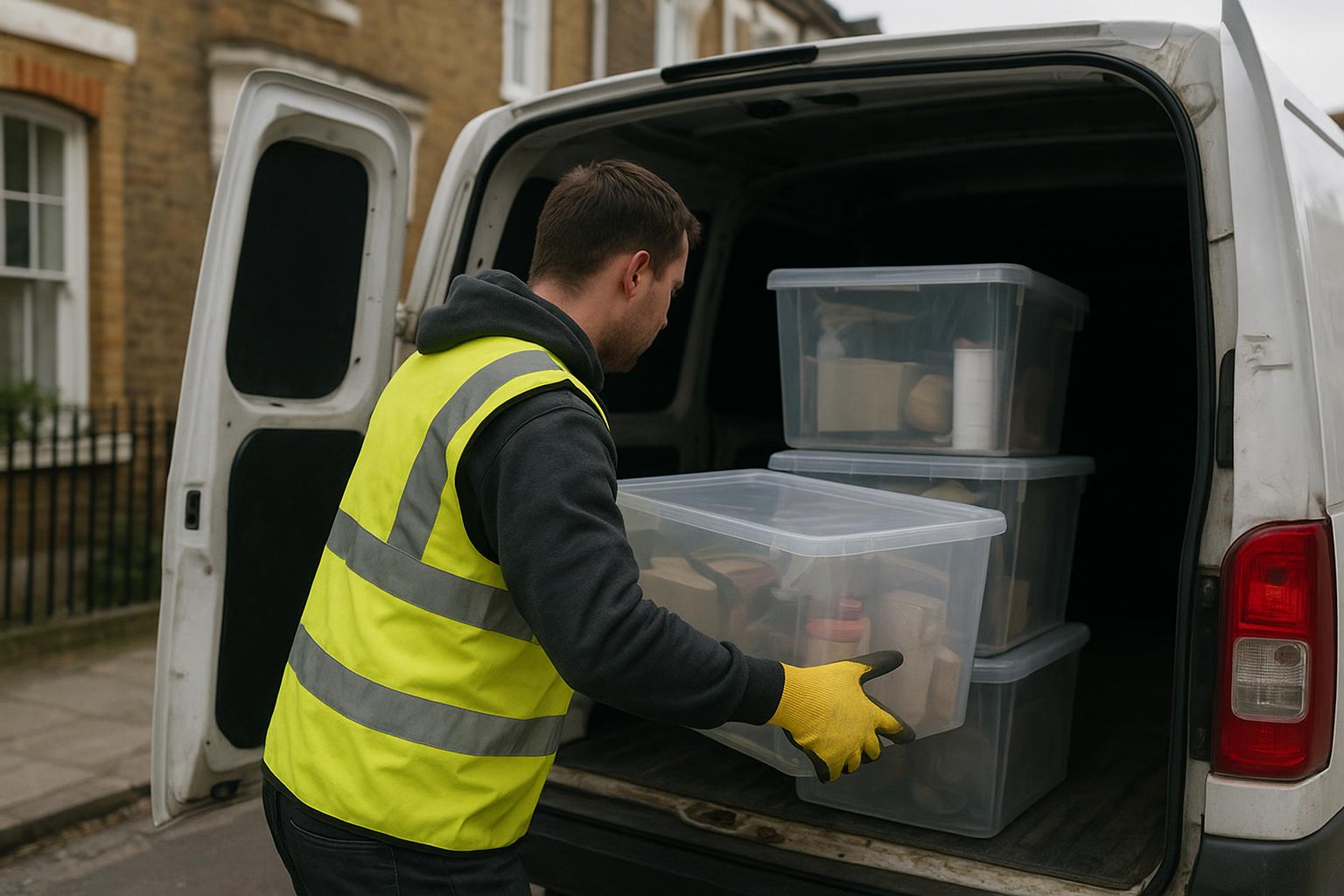
Hazardous household waste has to go to a site permitted to take it, and the carrier must be registered. If someone dumps what you handed over, you can be held responsible as the householder. Ask for the carrier's registration details, check them, and keep any paperwork. Our waste carrier licence page explains what the platform checks, the householder duty of care guide covers the law, and the fly-tipping penalties guide explains the penalties.
If hazardous items are part of a wider job, see the house clearance cost guide and the garage clearance cost guide, and see responsible disposal for what happens to waste afterwards.
Worked examples: pricing a mixed hazardous collection
Illustrative arithmetic from published figures, not real jobs.
The scenarios below show how the indicative figures combine. They are illustrations, not customer jobs and not quotes. The base charge in this guide covers a small mixed collection, and individual items with their own disposal charges on our prices page may be added to it by a carrier.
Scenario 1: a small household clear-out
A box of half-used household cleaners, a bag of old batteries, three fluorescent tubes and a few small electronics fits the base charge band of £80 to £150. Our prices page shows fluorescent tubes at £4 to £8 per tube and small domestic electronics at £10 to £20 per unit, so a carrier may fold those into the base or itemise them. The useful question to ask is which one the quote does.
Scenario 2: a garage with paint and a gas cylinder
Imagine a garage with four tins of wet paint, one gas cylinder and two old car tyres. From the prices page, that is four tins at £10 to £25, one cylinder at £45 to £85 and two tyres at £12 to £22 each. Adding the lower ends gives £40 + £45 + £24 = £109, and the upper ends give £100 + £85 + £44 = £229, before any base collection charge or other items. The arithmetic is the point: a short list of items with their own disposal costs can add up to more than people expect.
Scenario 3: part of a wider clearance
When hazardous items are part of a house or garage clearance, they are normally priced as extras within the wider quote. List them separately in your post so each carrier is quoting the same scope.
Per-item disposal figures at a glance
Regulated and hazardous items published on our prices page.
| Item | Indicative figure |
|---|---|
| Fluorescent lighting tube | £4 – £8 per tube |
| Small domestic electronics (microwave, kettle, vacuum cleaner) | £10 – £20 per unit |
| Wet paint | £10 – £25 per tin |
| Car tyre | £12 – £22 each |
| Large tyre (commercial truck or SUV) | £30 – £50 each |
| Flat screen TV or monitor under 40 inches | £15 – £25 |
| Gas canister or cylinder, empty or full | £45 – £85 each |
These per-item figures come from our prices page and are checked periodically. They are indicative and carriers can quote differently. Flag each item when you post so a carrier can quote accurately the first time, rather than adjusting the price on the day.
Why hazardous waste cannot go in the normal bin
What goes wrong when it is mixed with ordinary rubbish.
Hazardous items are separated from ordinary waste because of what can happen to them after they leave your home. Rechargeable batteries can short-circuit and cause fires in bin lorries and at sorting sites. Chemicals can react with each other or leak. Fluorescent tubes contain small amounts of mercury and release it if they break. Aerosols can burst under pressure. Electronics contain materials that should be recovered or treated properly, not sent to landfill.
That is why these items go to sites that can handle them, and why a collection is priced differently from an ordinary rubbish pickup. It also explains why a carrier will ask what is in a load. They need to know whether they are collecting bagged household waste or a box of chemicals, because the vehicle, packing and disposal route differ.
Safe handling before the carrier arrives
Simple rules that reduce risk to you and the crew.
- Never mix products. Combining cleaners, particularly bleach with anything else, can release harmful gases. Leave each in its own container.
- Do not decant. Keep products in original containers so the label identifies the contents. If a container is damaged, place it inside a larger sealed container and say so.
- Store upright, cool and dry. Keep items away from heat, flames, children and pets, and ventilate the space where they are stored.
- Protect terminals. Tape the terminals of lithium and other rechargeable batteries or bag each separately.
- Handle lamps whole. Do not break fluorescent tubes to save space. If one breaks, ventilate the room and follow the guidance of your council or the manufacturer.
- Do not burn or bury. Neither is a legal or safe disposal route for household chemicals.
If you are unsure whether something is hazardous, check the label and describe it in your post. If there is any chance it contains asbestos, do not disturb it and read our asbestos removal cost guide.
Common items in detail
What to know about each type before you book.
Household chemicals and cleaning products
Oven cleaners, drain unblockers, bleach, white spirit, weedkillers and pesticides are the usual suspects. Many councils accept household quantities at recycling centres, but commercial quantities or old, unlabelled containers can be refused. A carrier can take a mixed collection, but should be told what is there.
Batteries
Standard household batteries can often be returned to shops and supermarkets that sell them. Larger batteries such as those from e-bikes, scooters or tools are more hazardous and often need a specialist route. Say so clearly, because a damaged lithium battery is a fire risk and not something to leave in a hallway for weeks.
Fluorescent tubes and energy-saving lamps
These are collected as WEEE and should be kept whole. Our prices page lists tubes at £4 to £8 each, so a garage with a dozen old tubes is a small but real cost. Many council sites and some retailers accept them.
Paint and solvents
Wet paint is treated as liquid waste and is priced per tin on our prices page. Dried-out paint is generally easier to dispose of. See our paint and liquid waste guide for the details and how to dry out small amounts safely.
Gas cylinders
Cylinders are priced at £45 to £85 each on our prices page whether empty or full. If a cylinder belongs to a supplier, the supplier may take it back. Our gas bottle and cylinder guide explains how to check.
Tyres
Car tyres are listed at £12 to £22 each and larger tyres at £30 to £50. Tyres cannot go in general waste, and a retailer fitting new tyres usually takes the old ones.
London considerations
Council sites, access and borough differences.
London boroughs run their own household recycling centres, and the items they accept, the quantity limits and the proof-of-address or booking rules vary from site to site. A van-only or trade vehicle may be refused at a household site, which is one reason people book a licensed carrier instead of making their own trip. Check your council's website before you go, because accepted items change.
Flats make hazardous waste harder to move. A box of chemicals carried down several flights or through shared corridors needs care, and our prices page notes a typical £30 to £60 per flight where no lift is available. Parking and controlled zones can also matter, which is why we ask carriers to include parking in what they quote. See our tip runs guide for the self-service route and the coverage map for the boroughs the platform covers.
Household waste versus business waste
Why the rules differ depending on where the items came from.
The collection described in this guide is about items from a home. If hazardous items come from a business, such as a workshop, salon, shop or office, they are classed as commercial waste, and the producer has additional responsibilities for how they are handled and documented. Household recycling centres may refuse commercial quantities, so a business usually needs a licensed carrier from the start.
If you are a landlord or letting agent clearing a property after a tenancy, the position can be less clear. Items left by a tenant may be treated differently depending on the circumstances, so read our landlord and HMO clearance cost guide and tell the carrier who is clearing the property and why. The platform's B2B waste management service covers regular business collections.
Common mistakes to avoid
Where hazardous collections go wrong.
- Mixing chemicals to save space. It can cause dangerous reactions, and it makes disposal harder because the contents are unknown.
- Leaving lithium batteries in a pile. Damaged batteries should be stored separately and not left on charge or in direct heat.
- Not disclosing items. If a carrier arrives expecting bagged rubbish and finds chemicals and gas cylinders, the visit can be delayed or the price changed.
- Paying for a service you could get free. Check retailer take-back and council schemes first for batteries, lamps and small electronics.
- Skipping the carrier check. You have a duty of care to use a registered carrier. See the householder duty of care guide.
- Assuming everything is covered by one price. Ask which items are in the base charge and which are charged separately.
Hazardous waste checklist
A tidy way to prepare.
- List every product, how many of each and whether the containers are sealed and labelled.
- Separate batteries, lamps, paint, gas cylinders, tyres and electronics.
- Check whether a retailer or supplier will take anything back for free.
- Check your council site's accepted items and limits.
- Photograph the items and any damaged containers.
- Mention stairs, parking, building rules and your preferred day.
- Get quotes from licensed carriers and ask exactly which items are covered.
- Keep any paperwork you are given after the collection.
Comparing quotes for hazardous collections
What to ask each carrier.
- Is the quote a base charge, an itemised price or both?
- Which items carry their own disposal charge?
- Is the registered waste carrier number available, and where will the waste be taken?
- Is there a minimum charge or a limit on quantity?
- What happens if there are extra items on the day?
- Are parking, access and stairs included?
Because each carrier quotes independently, two quotes can differ simply because one itemises and one does not. Ask for the same breakdown from each so you compare like with like. Our guide to choosing a licensed clearance company has more to check.
Related guides
Where hazardous items turn up.
Hazardous items most often appear during a garage, shed or loft clear-out. See the garage clearance cost guide and, for a whole property, the house clearance cost guide. For specific categories, our guides to paint and gas cylinders go into more detail.
How the process works, start to finish
Three steps from description to collection.
Describe the job
List each type of item, the quantity and any labels.
Add access and timing
Mention parking, stairs and your preferred day.
Get a carrier quote
Licensed carriers quote against the real scope. Compare the offers and choose, with no obligation to accept. Ask what is included in the base charge.
Frequently asked questions
How much does hazardous household waste removal cost in London?
Indicatively £80 to £150 as a base charge for a small mixed collection of chemicals, batteries, lamps and electronics, plus per-item figures for things like paint, gas cylinders and tyres. The real price is the quote you receive.
What is classed as hazardous household waste?
Household chemicals, batteries, fluorescent lamps, small electronics, aerosols, paint, gas cylinders and tyres are common examples. Asbestos is a separate, more serious category.
Can I put batteries in the bin?
No. Rechargeable batteries in particular can start fires in bin lorries. Take them to a shop that sells batteries, a recycling centre or include them in a hazardous collection.
Will the council take household chemicals?
Many London recycling centres accept household quantities, with limits and proof-of-address checks. Check your council's website before you go.
Can I mix chemicals to save space?
No. Mixing products can cause dangerous reactions. Keep each in its original container with the label.
Can this be part of a bigger clearance?
Yes. List the hazardous items when you post, because they are handled separately from ordinary waste and the quote needs to cover them.
How much does it cost to dispose of a gas cylinder?
Our prices page lists an indicative £45 to £85 per cylinder, empty or full. Check first whether the supplier will take it back.
How much do tyres cost to dispose of?
Indicatively £12 to £22 for a car tyre and £30 to £50 for a larger commercial truck or SUV tyre, according to our prices page.
Can I put a damaged battery in the bin?
No. Damaged or swollen batteries are a fire risk. Keep them separate in a non-flammable place and ask a carrier or your council how to dispose of them.
What if I don't know what is in a container?
Do not open or mix it. Tell the carrier what you can see and describe the container, so they can plan how to handle it.
Should I itemise everything?
Yes. A clear list of types and quantities lets each carrier quote accurately and helps you compare like with like.
Are fluorescent tubes charged separately?
They are listed at £4 to £8 per tube on our prices page, and a carrier may either include that in a base charge or list it separately.
Ready to see your price?
Post your hazardous household waste collection for licensed carriers to quote on.