
Direct answer
Removing a fridge or freezer in London typically costs about £50 to £75 for an under-counter unit, £80 to £110 for a standard fridge freezer and £130 to £180 for an American-style model, including the disposal charge. Those are indicative ranges, not a fixed rate card: houseclearance.co publishes the disposal surcharge on /prices/, and a licensed carrier quotes the real price for your appliance and access.
Contents
- What fridge and freezer disposal costs in London
- Worked examples: how a fridge job adds up
- Other cooling equipment and what the prices page says
- Why fridges are charged for
- The rules behind the charge
- Your options compared
- What happens to the fridge after collection
- Which size category does your appliance fall into?
- How to prepare a fridge or freezer for collection
- Safety and handling tips
- Timing a fridge collection
- What to check when you compare quotes
- What moves the price up or down
- Common mistakes with fridge disposal
- London considerations
- How the process works, start to finish
- Landlords, tenants and shared properties
- Frequently asked questions
What fridge and freezer disposal costs in London
Indicative ranges, not a rate card: the final figure is always a carrier quote.
Fridges and freezers cost more to dispose of than most household items because the cooling system contains gases that must be removed at a specialist facility. The ranges below are indicative for a fridge-only collection in London, including the disposal charge. Our prices page lists the disposal surcharge separately.
| Appliance | Typical collection price | Disposal surcharge within that (from /prices/) |
|---|---|---|
| Under-counter fridge or freezer | £50 – £75 | £45 – £70 |
| Standard fridge freezer | £80 – £110 | £75 – £115 (tall fridge freezer) |
| American-style side-by-side | £130 – £180 | £120 – £190 |
These are planning figures, not a promise of a price. A price at the lower end assumes ground-floor access and the appliance being ready to go.
Worked examples: how a fridge job adds up
Illustrative arithmetic using the ranges above, not real customer jobs.
The scenarios below are planning examples only. They use the indicative ranges in this guide and the published figures on our prices page, and they are not records of real jobs or guaranteed quotes.
Scenario 1: a tall fridge freezer, ground floor kitchen
The indicative collection price is £80 to £110, and the disposal surcharge published on the prices page for a tall domestic fridge freezer is £75 to £115. These are not two separate bills added together: the surcharge is the part of the carrier's price that pays for degassing and processing. If access is easy and the unit is empty, defrosted and ready, the planning range is the collection figure.
Scenario 2: an American-style fridge freezer, first floor flat, no lift
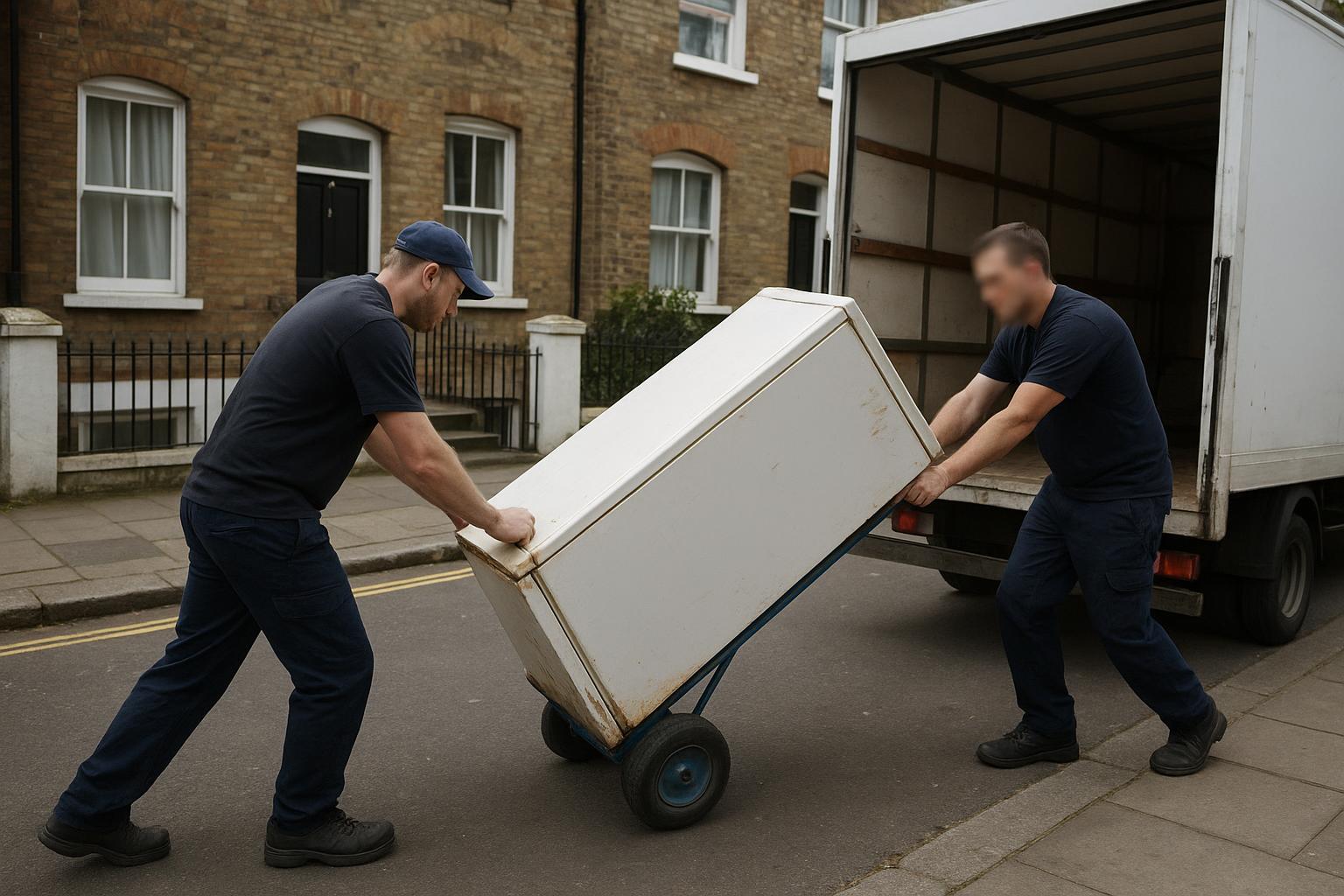
An American-style unit is indicatively £130 to £180. One flight of stairs without a lift typically adds about £30 to £60, so a planning range of about £160 to £240 is sensible. These units are wide and heavy, and the crew may need to take the doors off to get through. Measure your door and say if you know the unit came in through it.
Scenario 3: a fridge freezer plus a washing machine
The prices page lists a washing machine, tumble dryer or dishwasher surcharge of £30 to £50. Put a standard fridge freezer (£80 to £110) next to a washing machine and you have a combined job that is usually quoted as one visit, which is typically cheaper than two separate trips. Our white goods removal cost guide and washing machine removal guide cover the combined case.
Other cooling equipment and what the prices page says
Commercial and display units are priced higher.
The ranges above are for household fridges and freezers. Our prices page also publishes a disposal surcharge of £140 to £220 for a commercial display fridge. That is a surcharge, not a full collection price, and the final figure depends on size, access and the number of units. If you are clearing a shop, cafe or small office, post the full list of units so carriers can quote the whole job, and look at the office clearance cost guide if the fridge is part of a wider clearance.
Why fridges are charged for
Refrigerant gases and electrical waste rules.
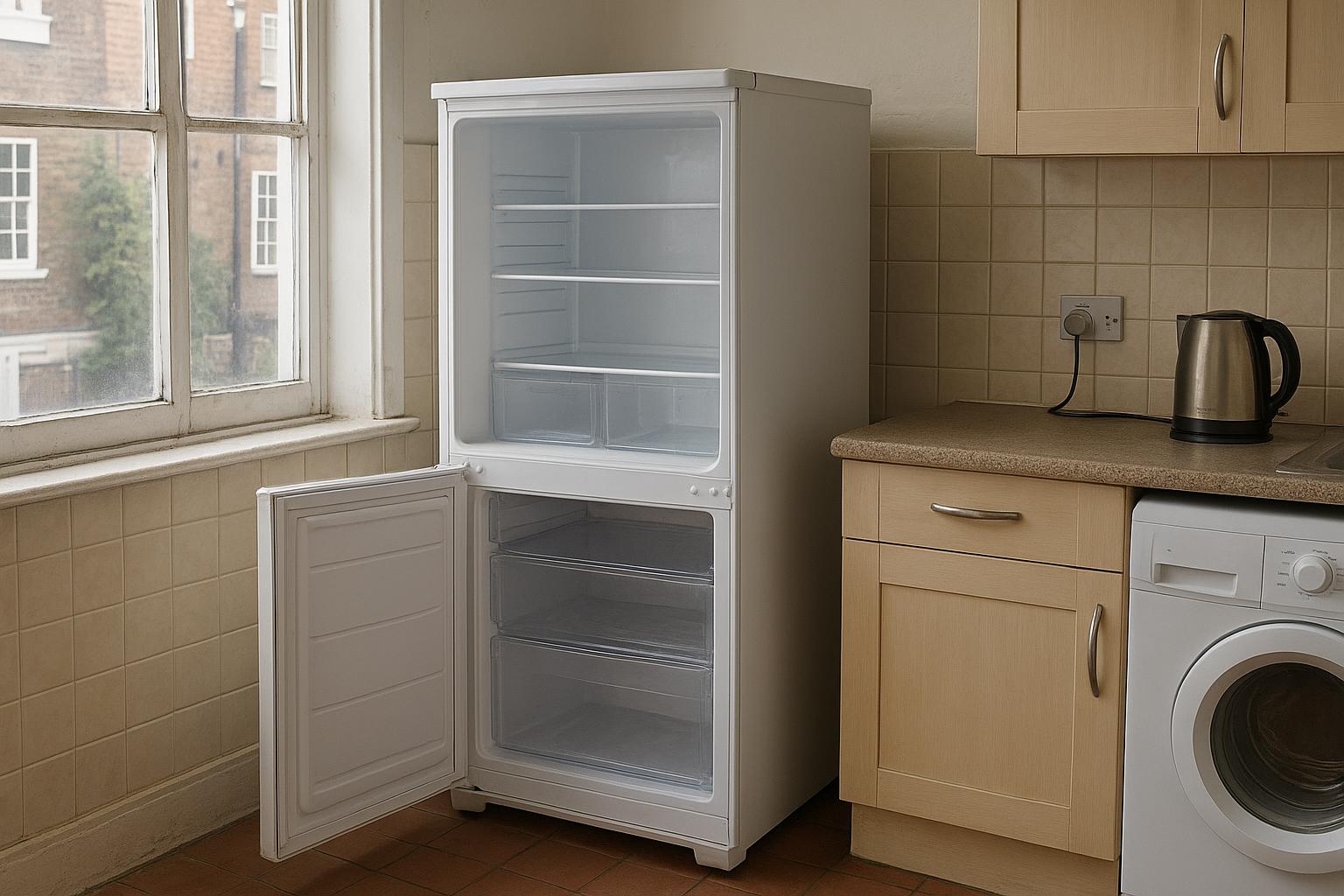
Refrigeration equipment is electrical waste and its refrigerant must be recovered rather than released. Disposal sites that handle this charge for it, and licensed carriers pass the cost on. This is why a free-looking removal offer deserves a question about where the appliance will go. Our guide to how to dispose of a fridge freezer for free covers the genuinely free routes, such as retailer take-back when you buy a new one, and the conditions that apply.
The rules behind the charge
Electrical waste, refrigerant recovery and your responsibilities.
A fridge or freezer is classed as waste electrical and electronic equipment, which is covered in the UK by the Waste Electrical and Electronic Equipment Regulations 2013. The effect of the rules for householders is straightforward: the appliance should not go into general waste or be left on the street, and it should be handled by someone who can send it to an authorised treatment facility. The cooling circuit of an older fridge may contain CFC gases, and newer ones contain HFCs. Either has to be recovered rather than released, which is why our prices page describes dedicated degassing facilities.
For you as the householder, the legal angle is the duty of care. You must pass the appliance to someone authorised to take it. A registered waste carrier who takes it to a proper facility is one route. A man with a van who offers to take it away cheaply and gives no paperwork is a risk, because if it is dumped, the trail can lead back to you. Our householder duty of care guide and guide to choosing a licensed company explain what to ask for. You can check carrier registration on the government's waste carrier registration page, and background on the wider problem is on the fly-tipping page.
Your options compared
Free routes exist, but each has conditions.
| Route | Typical condition | Main catch |
|---|---|---|
| Retailer take-back with a new appliance | Offered when you buy a replacement from the retailer | Terms vary by retailer and delivery date, so check before you order |
| Council bulky waste | Booking required, often a fee | Items may need to be left outside and slots can be days away; see the Hillingdon example |
| Charity collection | Working, clean appliances | Many only take certain items and may not collect from upper floors |
| Household recycling centre | You transport it yourself | Needs a suitable vehicle and rules on appliances differ by site |
| Private licensed carrier | Any condition, including broken units | You pay the quote, which includes the disposal charge |
The free options are real, particularly retailer take-back, but each depends on timing and conditions. For a step-by-step view, see how to dispose of a fridge freezer for free. If you need the appliance gone by a set date, or you are clearing a property, a private carrier is usually the practical choice.
What happens to the fridge after collection
From your kitchen to a treatment facility.
It helps to understand the chain, because it explains both the price and the paperwork questions. A licensed carrier collects the appliance, keeps it upright where possible and takes it to a site that handles refrigeration equipment. There the refrigerant is recovered by a specialist process, the oil is drained and the remaining metals, plastics and glass are separated for recycling. That sequence is what our prices page means when it refers to dedicated degassing facilities.
From a householder's point of view, what matters is that the appliance goes into this chain rather than into a skip, a landfill or a roadside. When you compare quotes, it is reasonable to ask where the appliance is going and for the carrier's waste carrier registration. A reputable carrier will answer without fuss. Houseclearance.co is a marketplace, not the carrier, so the arrangement for collection and disposal is between you and the carrier you choose, and our guide to choosing a licensed company sets out the checks to make.
Which size category does your appliance fall into?
Picking the right category stops the quote changing on the day.
- Under-counter fridge or freezer. Roughly worktop height and fits under a kitchen counter. Often a one- or two-person job on the ground floor.
- Standard or tall fridge freezer. The usual household unit with a fridge and freezer in one tall cabinet, often around head height or taller.
- American-style side-by-side. Wide, with two doors, often with an ice or water dispenser. It is heavier and may need the doors removed and a water line disconnected first.
- Chest freezer. Not priced separately on our prices page. Describe the size and where it is, such as a garage or garden shed, and let the carrier quote for it.
- Wine cooler or drinks fridge. Small, but it still contains refrigerant. Mention it as a fridge when you post.
- Integrated fridge. Built into a kitchen unit and often fixed to the cabinet door. Check whether it needs to be unscrewed first and who will do that.
If you are not sure, a photo of the label inside the door or on the back panel often gives the model number and helps a carrier identify the size. If you cannot find it, simply describe the height and width.
How to prepare a fridge or freezer for collection
Empty, defrost and clear the route.
- Empty it completely and dispose of food separately.
- Switch it off and defrost a freezer in advance, with towels down for the water.
- Remove shelves and drawers or tape them in place so they do not fall out.
- Measure the doorway if the appliance is large, especially for American-style models.
- Clear the route and say how many flights of stairs there are.
If you are removing other appliances too, see the white goods and appliance removal cost guide and the washing machine removal guide.
Safety and handling tips
Appliances are heavy, awkward and sometimes leaky.
- Keep it upright. Moving a fridge on its side can disturb the compressor oil. Carry it upright where possible and tell the crew if it has been tipped.
- Protect the floor. Defrosting produces water, and old fridges can leave residue. Lay towels or a plastic sheet around the base.
- Secure the doors. Tape the doors shut or remove them if you know how, so they do not swing open on stairs.
- Do not cut or damage the pipes. The cooling circuit should stay sealed until the appliance reaches a treatment facility.
- Use two people for anything tall or American-style. Do not try to carry these alone.
- Follow general safe-lifting guidance. See how to move heavy furniture safely and our PPE and health guidelines.
Timing a fridge collection
Planning around defrosting and food saves a wasted visit.
The best sequence is to use up or move food in the days before, switch the appliance off the evening before and defrost the freezer overnight. Freezers with a lot of ice can take a day or more to defrost fully. If you are replacing the appliance, think about where the food will live in between, and arrange a cool bag or a neighbour's freezer. A carrier is not obliged to take a dripping appliance, and an unprepared one can lead to a delay or an extra charge, so give it time.
If a carrier is collecting from a flat, tell them whether there is a concierge, a lift booking system or a time limit on loading. Some buildings only allow deliveries and collections at specific hours.
What to check when you compare quotes
Make sure the quotes cover the same scope.
- Appliance type. Did you state under-counter, standard or American-style? The prices differ substantially.
- Disposal included. Is the degassing and disposal charge part of the figure?
- Stairs, lift and parking. Are these included or extra? Our prices page notes about £30 to £60 per flight and suspension fees of about £35 to £90 per day in some boroughs.
- Congestion Charge. The standard TfL charge is £18 when applicable, but whether it affects your quote depends on the vehicle, route, time and what the provider has included. Confirm with the provider and check current TfL guidance.
- Registration. Does the carrier hold a waste carrier registration?
- Time window. Is there a specific arrival slot?
You can post, compare and ask questions before choosing, and you have no obligation to accept any quote.
What moves the price up or down
Size, stairs and access.
- Size. American-style units are heavy and often need two or more people.
- Stairs. Without a lift, carrying down stairs typically adds about £30 to £60 per flight, according to our prices page.
- Combined jobs. A fridge as part of a larger clearance usually costs less than a separate trip. The bulky item cost guide explains how loads are priced.
- Local rules. Some councils collect fridges as bulky waste for a fee, for example the arrangements described in our Hillingdon fridge disposal guide.
Common mistakes with fridge disposal
Avoidable problems on the day.
- Not defrosting. Water and ice make the appliance heavier and the floor slippery.
- Leaving food inside. The crew will not remove it and it can delay the job.
- Forgetting the doorway. American-style units may be wider than the door they came through, especially if they were installed before a door frame was changed.
- Accepting a kerbside price with no paperwork. That leaves you with the duty of care risk described above.
- Booking a charity before checking it will collect. Some only take appliances up to a certain age or from ground floors.
- Treating a free listing as free removal. Giving it away may still cost you time and effort getting it out of the home.
London considerations
Space, stairs and parking in the capital.
Fridge collections in London often involve a narrow kitchen, a flat above ground level and limited parking. Take a photograph of the route from the kitchen to the street and describe it when you post. Where the building has a lift, check that it is large enough for the appliance and whether you need to book it. Where parking is restricted, our prices page says you may need to supply a visitor permit or allow for a council suspension fee.
Council arrangements also differ across the capital. Some boroughs collect fridges as part of a bulky waste service for a fee, and others direct residents to a recycling centre. The Hillingdon fridge disposal guide is one example. Check your own council's current rules, and use them to compare with a private carrier quote.
How the process works, start to finish
Three steps from description to collection.
Describe the job
Say what type and size of fridge or freezer it is, roughly how much there is and anything you want to keep.
Add access and timing
Mention the floor, lift, doorways and where a vehicle can park.
Get a carrier quote
Post the job, compare licensed carriers' quotes and choose, with no obligation to accept.
Landlords, tenants and shared properties
Different people make different decisions about the fridge.
Fridges are a common point of confusion in rented and shared homes. If the appliance was supplied with the property, the tenancy agreement and the landlord's instructions decide who arranges its removal. If you own the appliance, you are responsible for it and for choosing a lawful way to dispose of it. When you are clearing a rental property, post all the white goods together so that carriers can quote the whole job, and see the landlord and HMO clearance cost guide for how multi-room clearances are priced.
In a shared house or block, mention shared access: a communal hallway, a limited lift or a neighbour who needs notice. It also helps to agree who will be present to give access, because a carrier cannot enter an occupied property without someone letting them in.
Finally, avoid leaving an old appliance in a communal bin store, a garden or a shared driveway while you wait for a collection. It can obstruct the area, and if someone reports it, you may be asked to deal with it urgently.
Frequently asked questions
How much does it cost to dispose of a fridge in London?
Indicatively £50 to £75 for an under-counter model, £80 to £110 for a standard fridge freezer and £130 to £180 for an American-style unit. The real price is the quote you receive.
Why is fridge disposal more expensive than other items?
The refrigerant gases must be recovered at a specialist facility, and carriers pass that cost on.
Can I get a fridge collected for free?
Sometimes. Retailers may take your old appliance when you buy a new one, and some charities collect working models. Check conditions first.
Do I need to defrost the freezer first?
Yes, ideally the day before, so the appliance is dry and safe to carry.
Will the carrier take a broken fridge?
Usually yes, as long as you say it is broken when you post. It does not need to work to be collected.
Can I add other appliances to the same collection?
Yes. Post everything together so the quote covers the full job, and it will usually cost less per item than separate trips.
Can I put a fridge out on the street for the council?
Not without arranging it. Councils that collect fridges normally need a booking and often a fee, and leaving one outside without a booking can be treated as fly-tipping. Check your council's current rules.
Does the fridge have to be empty and switched off?
Yes. Empty it, switch it off and defrost it at least overnight so the appliance is dry and safe to carry.
Will a carrier take a commercial display fridge?
Often yes, but it is priced differently. Our prices page lists a disposal surcharge for commercial display fridges, so give the size and the number of units when you post.
What is the difference between a fridge and a fridge freezer for pricing?
Under-counter units and smaller fridges are lower in the ranges, while tall fridge freezers and American-style units cost more because they are bigger and carry a higher disposal surcharge.
What if I am buying a new fridge?
Ask the retailer first about taking the old one away on delivery. It may be free, but terms differ, so confirm the conditions and the timing.
Is a broken fridge treated differently?
A broken appliance can still be collected and processed. Say that it is broken when you post so the crew know what to expect.
Ready to see your price?
Post your fridge or freezer removal job for licensed carriers to quote on.