
Direct answer
Paint disposal in London typically costs about £10 to £25 per tin of wet paint, and many carriers apply a minimum charge of around £50 for a small collection. Those are indicative ranges, not a fixed rate card: houseclearance.co lists the per-tin figure on /prices/, and a licensed carrier quotes the real price. Oil-based paint and solvents are more hazardous than emulsion and can cost more, and councils set their own rules for tip and bulky-waste options.
Contents
- What paint and liquid waste disposal costs in London
- Why paint and liquids are treated differently
- Your options for leftover paint and liquids
- Preparing paint and liquid waste for collection
- Paint as part of a garage, shed or house clearance
- Which paint and liquid products you may have
- Worked examples: how the per-tin and minimum charge interact
- Sorting and labelling checklist
- Comparing your routes side by side
- Why disposal is controlled: environment and safety
- After decorating, renovating or a house move
- Buying less and wasting less paint
- Questions to ask before you accept a quote
- Price table: indicative ranges at a glance
- How the process works, start to finish
- Frequently asked questions
What paint and liquid waste disposal costs in London
Per-tin pricing and a minimum charge, not a flat rate.
Liquid paint and similar waste cannot go in ordinary rubbish or a skip, so carriers charge to take it to a site that can accept it. The figures below are indicative for London. Our prices page lists paint disposal per tin, and many carriers also apply a minimum charge because the collection and handling time is the same whether there is one tin or several.
| Item | Indicative cost |
|---|---|
| Wet (liquid) paint, per tin | £10 – £25 per tin (from /prices/) |
| Minimum charge for a small collection | Around £50, depending on the carrier |
The price per tin depends mostly on the size of the tin and on whether the paint is water-based (emulsion) or oil-based (gloss, undercoat, solvent-based). Oil-based paints and solvents are more hazardous and can cost more to dispose of. These are planning figures, not a fixed rate card: the quote you receive is what counts.
Why paint and liquids are treated differently
Wet paint is hazardous waste in a way dry waste is not.
Liquid paint, solvents, white spirit, thinners, brush cleaners and similar products can pollute water and soil, and some are flammable. They are not allowed in your normal household bin, and they should never be poured down a drain, onto the ground or into a watercourse. Dry, empty tins are usually treated more simply than tins with liquid still in them, but councils set their own rules, so check yours.
A carrier taking wet paint should separate it from general waste and use a site permitted to accept it, which is part of why it costs more than ordinary rubbish. Ask them where it is going. Our householder duty of care guide explains why you should check who takes your waste, and the waste carrier licence page explains what you can ask.
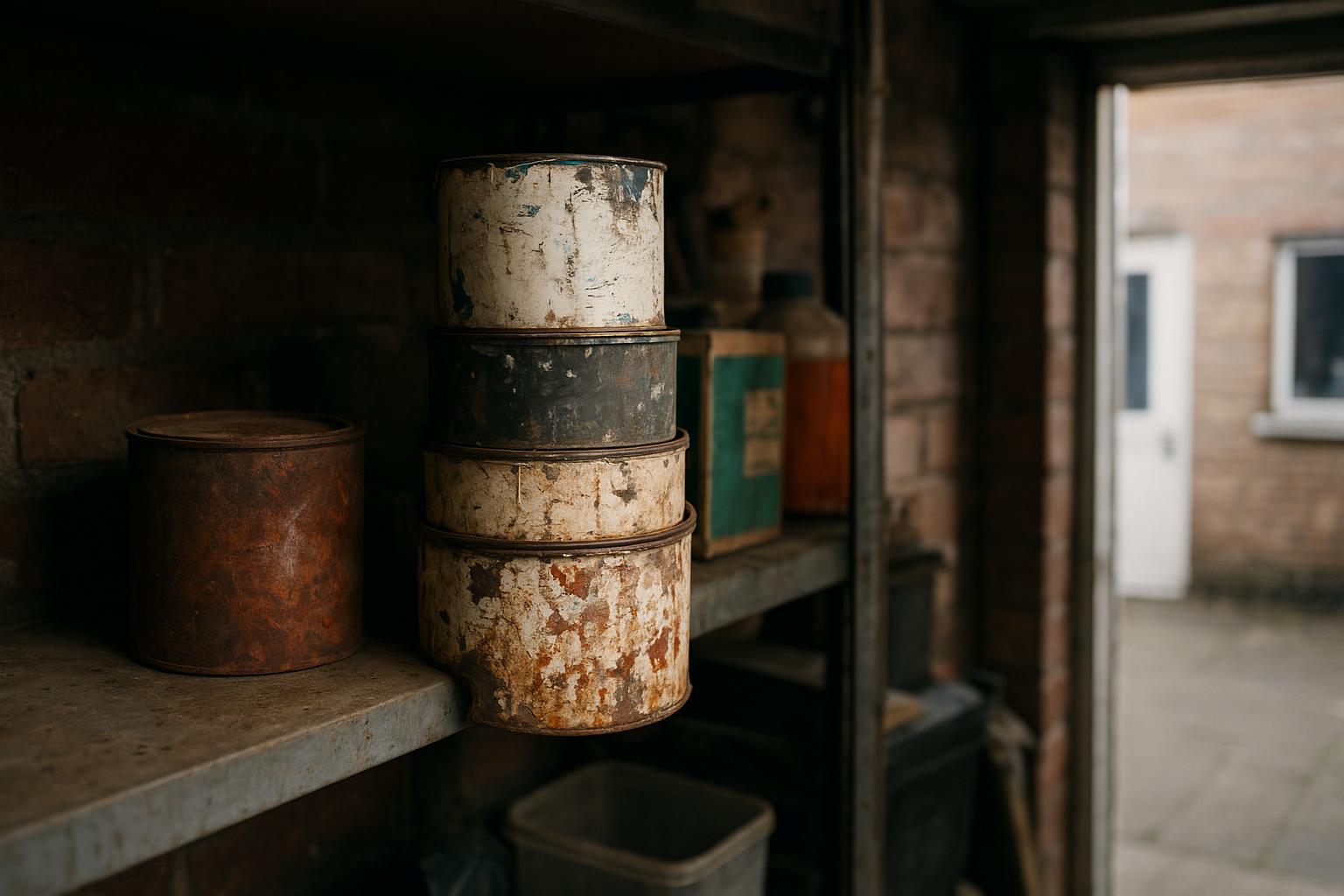
Your options for leftover paint and liquids
Reuse, council sites and private collection.
- Reuse first. If the paint is usable and sealed, a local community reuse scheme or a neighbour, school or community group may want it. Schemes such as Community RePaint redistribute leftover paint, but availability varies by area, so check before you travel.
- Household recycling centre. Many London recycling centres take small amounts of household paint and some other liquids such as oil, usually with limits on volume and a proof-of-address rule. Check your council's website, because rules and opening times differ. Our tip runs guide explains what to expect at a London site.
- Council bulky or special collections. Some councils collect certain hazardous household items by arrangement. Check what yours accepts.
- Private carrier. A licensed waste carrier will collect from your home or garage and dispose of it properly. That costs more than a council site but is convenient when you have a lot, or paint mixed in with a clear-out.
Small amounts of water-based paint can sometimes be dried out before disposal, for example by mixing with an absorbent material such as cat litter and leaving the lid off in a safe place, but only follow that approach if your council says dried paint tins are accepted in its household waste or recycling.
Preparing paint and liquid waste for collection
Safe handling makes the visit quicker.
Before you post the job
- Count the tins and note their size and whether they are water-based or oil-based.
- List any other liquids, such as white spirit, thinners, engine oil, antifreeze or garden chemicals.
- Tell the carrier where the tins are stored, for example a garage, shed or loft.
On the day
- Keep lids tightly closed and tins upright. Do not mix different products together.
- Keep the original labels so the carrier knows what each tin contains. If a tin has no label, say so.
- Place tins in a sturdy box or tray in a cool place away from heat, children and pets until collection.
Our garage clearance preparation guide and the shed clearance preparation guide have fuller checklists, because old paint is most often found in these places.
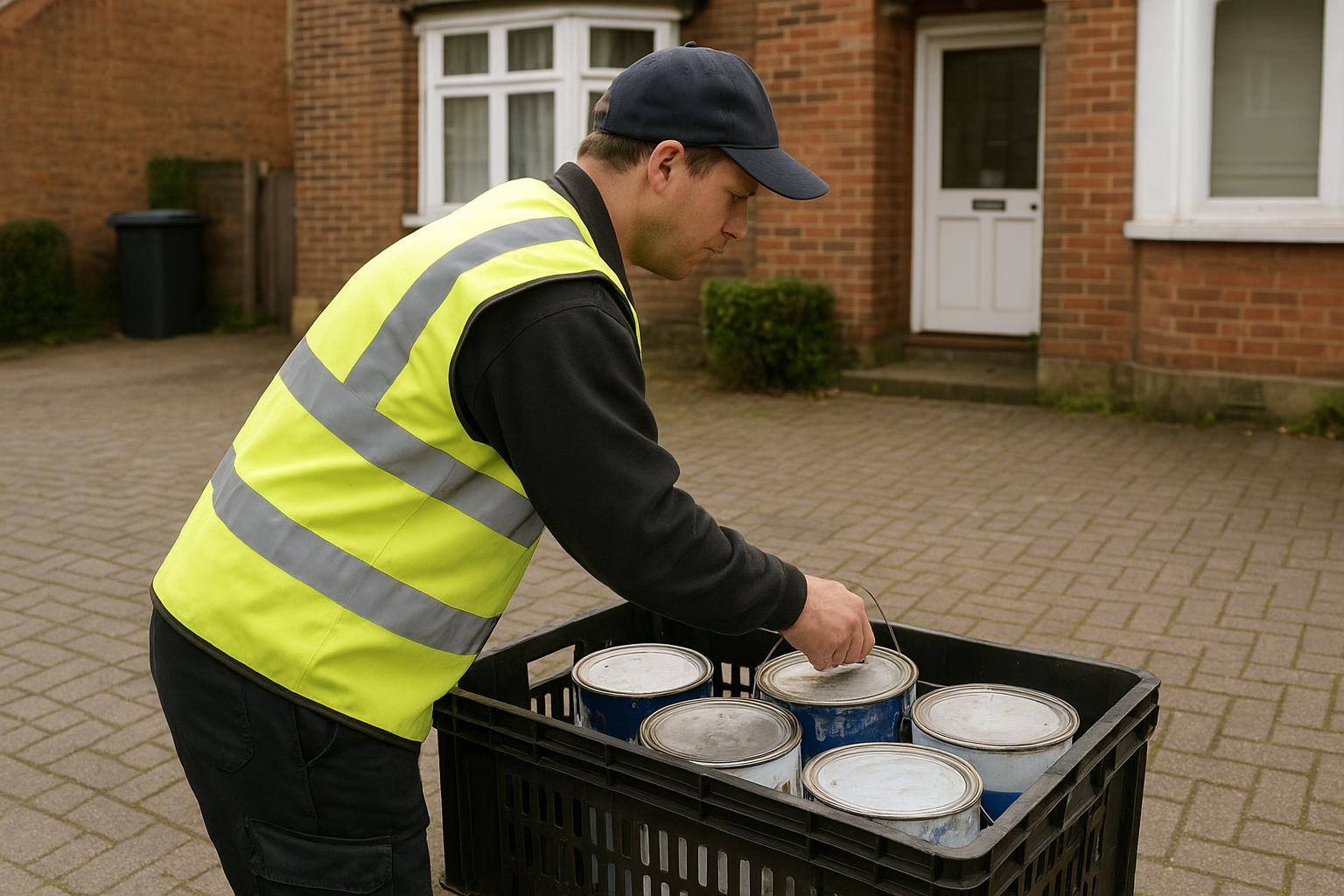
Paint as part of a garage, shed or house clearance
When it adds to the quote.
Leftover paint is common in garages, sheds and lofts, and in properties being cleared after a death or sale. If it is going with a wider job, mention it when you post, because it is handled separately from ordinary waste. The garage clearance cost guide, the shed clearance cost guide and the house clearance cost guide explain how those jobs are priced, and the builders and renovation waste guide covers paint left over from decorating work.
If paint or other liquids have been dumped, see our guidance on fly-tipping penalties, because leaving hazardous waste in the street can lead to enforcement action.
Which paint and liquid products you may have
Different products, different rules, one starting range.
Leftover paint is rarely the only liquid in a garage or shed. Carriers treat different products differently, and the indicative £10 to £25 per tin on our prices page applies to wet paint. Other liquids are quoted individually. The table sets out the usual suspects.
| Product | Typical handling | What to tell the carrier |
|---|---|---|
| Water-based emulsion | Lowest hazard of the group. Some councils accept dried-out tins, and many recycling centres take small amounts. | Number of tins, size, whether sealed. |
| Gloss, undercoat and other oil-based paint | More hazardous and can cost more. Keep away from heat. | Brand label if readable, tin size, any skin or separation. |
| White spirit, thinners and brush cleaner | Flammable solvents. Never pour down a drain or onto the ground. | Container size and how full it is. |
| Wood preservative, stain and varnish | Often solvent- or oil-based. Handle like oil-based paint. | Type and quantity. |
| Engine oil, antifreeze and garden chemicals | Treated separately. Some recycling centres take oil, but rules vary. | Container, quantity and any label. |
| Aerosol cans | Pressurised and flammable. Check council rules before using the household bin. | Number and whether they are empty. |
This is general guidance. If you cannot read the label, say so and include a photograph. For a wider mix of hazardous household items, the hazardous household waste removal cost guide explains how those jobs are priced.
Worked examples: how the per-tin and minimum charge interact
Planning arithmetic from the published ranges. Illustrations, not real jobs or quotes.
The two figures on this page work together: a per-tin range from our prices page and a minimum charge of around £50 that many carriers apply, depending on the carrier. The scenarios below are hypothetical and show how they combine.
Scenario 1: two small tins after a decorating job
Two tins at £10 to £25 each is £20 to £50, which sits at or below a typical minimum. In that case the minimum charge is likely to be the real figure. A small collection of this kind is better combined with other items, or taken to a recycling centre if your council accepts household paint.
Scenario 2: ten tins of mixed age from a garage
Ten tins at the indicative £10 to £25 each would be roughly £100 to £250, well above the minimum. Here the number of tins, and whether any are oil-based or unlabelled, sets the price. Posting photos of the shelf is often enough to get a firm quote.
Scenario 3: paint among a whole-garage clear-out
When paint is one part of a larger clearance, the minimum charge is usually absorbed because the carrier is already on site. List the paint separately in the job so it is handled correctly, and see the garage clearance cost guide for the rest.
The most common cause of price changes is a tin count that turns out to be higher than described, or the discovery of solvents and oil-based products that were not mentioned. Counting honestly at the start is the cheapest thing you can do.
Sorting and labelling checklist
Ten minutes of sorting that makes quoting accurate.
- Line the tins up. Group water-based, oil-based, solvents and other liquids, and count each group.
- Check lids. Wipe the rim and hammer or press lids on firmly. A leaking tin should go inside a sturdy bag or tray.
- Do not combine. Pouring different products together is dangerous and can make disposal harder.
- Label unknowns. A tin with no label can be marked 'unknown' with a pen so the carrier can see you have separated it.
- Set aside reusable paint. Sealed, usable tins may be suitable for a community reuse scheme, and a short search can find one near you.
- Separate empties. Empty, dry tins are often treated as ordinary recycling. Check your council's rules rather than assuming.
- Photograph the lot. One clear picture of the shelf or box saves a lot of back and forth.
Keep the tins upright in a cool place away from children, pets and heat until the carrier arrives. If any have spilled, soak up the paint with an absorbent material, keep it away from drains and ask your council how to dispose of the contaminated material.
Comparing your routes side by side
Cost, convenience and limits.
| Route | Typical cost | Best when | Limits |
|---|---|---|---|
| Reuse scheme, neighbour or community group | Free | Paint is sealed, usable and in good condition | Availability varies by area, and they may not accept old or unlabelled paint. |
| Household recycling centre | Often free for householders, subject to limits | A few tins, you have a car, and your council accepts them | Volume limits, proof of address and opening hours. Check before you go. |
| Council special collection | Set by the council | Your council offers one for hazardous household items | Booking window and a short list of accepted items. |
| Licensed carrier | Indicatively £10 to £25 per tin, with a minimum often around £50 | You have a lot, mixed liquids or a wider clear-out | Compare quotes and ask where the waste will go. |
For London-specific tip rules, see the tip runs guide and the guides for Hounslow, Harrow and Hillingdon. Council rules change, so check the current website for your own borough before you travel.
Why disposal is controlled: environment and safety
The reason it costs more than an ordinary bag of rubbish.
Paint and solvents contain substances that can harm water, soil and wildlife. A single tin poured down a drain can pollute a watercourse, and tins in a bin lorry can leak, ignite or contaminate other waste. Solvent-based products are also flammable and give off fumes, which is why they should be stored away from heat and ventilated spaces used for storage.
This is the reason a licensed carrier separates paint from general waste and uses a permitted site. It also explains why a surprisingly cheap offer deserves a question about where the paint is going. See the responsible disposal page for how waste is handled after collection, and the householder duty of care guide for your responsibilities. If paint has already been dumped in the street, the fly-tipping penalties guide explains the risk of leaving it.
After decorating, renovating or a house move
Where large amounts of leftover paint come from.
Landlords, decorators and anyone clearing a property tend to end up with a lot of tins. Typical moments are the end of a tenancy, after a loft conversion or extension, and when a property is cleared after a bereavement or sale.
- End of tenancy. Tenants sometimes leave paint behind, and landlords then need it removed. The end of tenancy clearance cost guide and landlord abandoned property clearance page are good starting points.
- Renovation and building work. Builders' leftovers are covered in the builders and renovation waste cost guide. Make sure your contractor tells you who is responsible for the waste.
- Probate and bereavement. Older sheds and garages often hold decades of tins. See probate house clearance costs for how those jobs are priced.
- Loft and storage clearances. Check the loft clearance cost guide and storage unit clearance cost guide.
In all of these, tell the carrier about the paint when you post the job. It will not make the job impossible, but it needs to be handled separately and quoted honestly.
Buying less and wasting less paint
The cheapest tin to dispose of is the one you never bought.
- Measure the walls and use the coverage figure on the tin before you buy, then add a small margin.
- Buy the smallest tin that suits the job, and consider tester pots for colour trials.
- Seal leftover paint properly: wipe the rim, press the lid down firmly and store the tin upside down so a skin forms on the lid and not the paint.
- Label tins with the room, the colour name and the date, so you can use them for touch-ups.
- Offer spare paint to neighbours, schools and community groups before it ages.
If you are managing a larger project, ask your decorator to take unused sealed tins away or to leave them labelled for touch-ups. It avoids both the disposal charge and the clutter.
Questions to ask before you accept a quote
Separate a careful quote from a vague one.
- Is the price per tin, per visit or both, and does a minimum charge apply?
- Does the quote cover oil-based paint, solvents and any other liquids I have listed, or only water-based paint?
- Where will the paint be taken, and is it a site permitted to accept it?
- Can you give me your waste carrier registration, and will you issue a waste transfer note? See the waste transfer notes guide.
- Is there any extra for stairs, parking restrictions or short notice?
- What happens if I find more tins on the day than I described?
Clear answers to these questions matter more than the lowest number. Our guide to choosing a licensed clearance company and the waste carrier licence check page explain what you can verify yourself. Remember that houseclearance.co shares your job with independent carriers, and the carrier you choose sets the price and does the collection.
It also helps to agree access in advance. Tell the carrier whether tins are in a locked garage or a loft, whether someone will be home, and where a vehicle can stop. Carriers quote more accurately, and arrive ready, when these details are in the job post at the start.
Price table: indicative ranges at a glance
Indicative London ranges excluding VAT, taken from the houseclearance.co prices page.
The table below sets out the published ranges from our prices page that are most relevant to paint and liquid waste. Your real price is whatever a licensed carrier quotes after you describe what you have.
| Item or collection size | Indicative London range (excl. VAT) |
|---|---|
| Wet (liquid) paint, per tin | £10 – £25 |
| 1/8 van load | £95 – £135 |
| 1/4 van load | £145 – £195 |
Dried-out tins may be treated differently from liquid paint, and the minimum charge for a small collection varies by carrier. List the number and size of tins in your job post so the quote reflects them.
How the process works, start to finish
Three steps from description to collection.
Describe the job
List the tins and liquids, their size and type, and where they are.
Add access and timing
Mention parking, stairs and your preferred day.
Get a carrier quote
Licensed carriers quote against the real scope. Compare the offers and choose, with no obligation to accept. Ask whether the minimum charge applies.
Frequently asked questions
How much does it cost to dispose of paint in London?
Indicatively £10 to £25 per tin of wet paint, with many carriers applying a minimum charge of around £50 for a small collection. The real price is the quote you receive.
Can I put paint in my household bin?
Not liquid paint. Dry, empty tins are often accepted in recycling or household waste, but rules differ between councils, so check yours.
Can I pour leftover paint down the drain?
No. It can pollute water and damage drains. Take it to a site that accepts it or have a licensed carrier collect it.
Will my council tip take paint?
Many London recycling centres take small amounts of household paint, usually with limits and proof-of-address checks. Check your council's website before you go.
Is oil-based paint treated differently from water-based?
Yes. Oil-based paint and solvents are more hazardous and can cost more to dispose of. Say which you have when you post the job.
Can paint be reused instead of thrown away?
If it is sealed and usable, a community reuse scheme or a local group may take it. Availability varies by area, so check first.
Is there a minimum charge for paint disposal?
Many carriers apply one, indicatively around £50 for a small collection, because handling time is similar for one tin or several. Ask each carrier.
Can I dispose of old aerosol cans with the paint?
Tell the carrier about them. Aerosols are pressurised and flammable, and councils have different rules, so list them in the job.
What if the paint tin has no label?
Say so when you post the job, include a photo and keep it separate from other products. The carrier may treat it as an unknown liquid.
Can I mix leftover paint to save space?
No. Mixing products can be dangerous and makes disposal harder. Keep each product in its own closed container.
How should I store paint until it is collected?
Closed, upright, in a sturdy box or tray, in a cool place away from heat, children and pets, and away from drains.
Does dried paint count as hazardous waste?
Dried paint is generally simpler to dispose of, but councils set their own rules. Check your council's website before putting dried tins in household waste or recycling.
Ready to see your price?
Post your paint and waste collection job for licensed carriers to quote on.