
Direct answer
Clearing a studio flat or bedsit in London typically costs about £150 to £280, roughly a quarter to a half of a Luton van load. That is the indicative range on our prices page, not a fixed rate card: a licensed carrier quotes the real price for your flat, floor and access.
Contents
- What a studio flat or bedsit clearance costs in London
- What moves the price up or down
- Landlords, tenants and tight deadlines
- Two worked examples of how a studio quote adds up
- Studios, bedsits and what is different about each
- If you only need part of a studio cleared
- Stairs, parking and building rules in small flats
- A checklist for a studio, area by area
- Clearing a studio as a landlord or agent
- Cheaper alternatives to a full studio clearance
- Why people clear a studio, and what it means for timing
- Common mistakes with studio clearances
- What the published allowances actually mean
- Comparing studio clearance quotes
- Disposal and your responsibility
- What happens on the day
- How to prepare a studio clearance
- How the process works, start to finish
- Frequently asked questions
What a studio flat or bedsit clearance costs in London
Published ranges from our prices page.
A studio flat or bedsit is the smallest property type we publish a price for. Our prices page gives a range of £150 to £280, which assumes a standard two-person loading team and reflects a small amount of furniture, basic appliances and personal items.
| Item | Typical figure |
|---|---|
| Price range (excl. VAT) | £150 – £280 |
| Weight allowance | Up to 200 kg |
| Loading time | 30 – 45 minutes |
| Typical scenario | Minimalist layout, basic white goods, no heavy carpets |
That is about a quarter to a half of a Luton van load. These are indicative ranges, and the price you pay is the quote from a licensed carrier for your actual flat.
What moves the price up or down
Small flats still vary.
- Volume. Our van-load table shows how the price rises from the single-item minimum through a quarter and half van load.
- Floor and lift. Many studios are on upper floors. Stairs without a lift typically add £30 to £60 per flight.
- Regulated items. A mattress, sofa or fridge adds its own disposal surcharge, listed on the prices page.
- Parking. Studio flats are often in controlled parking zones, which can add a suspension or permit cost.
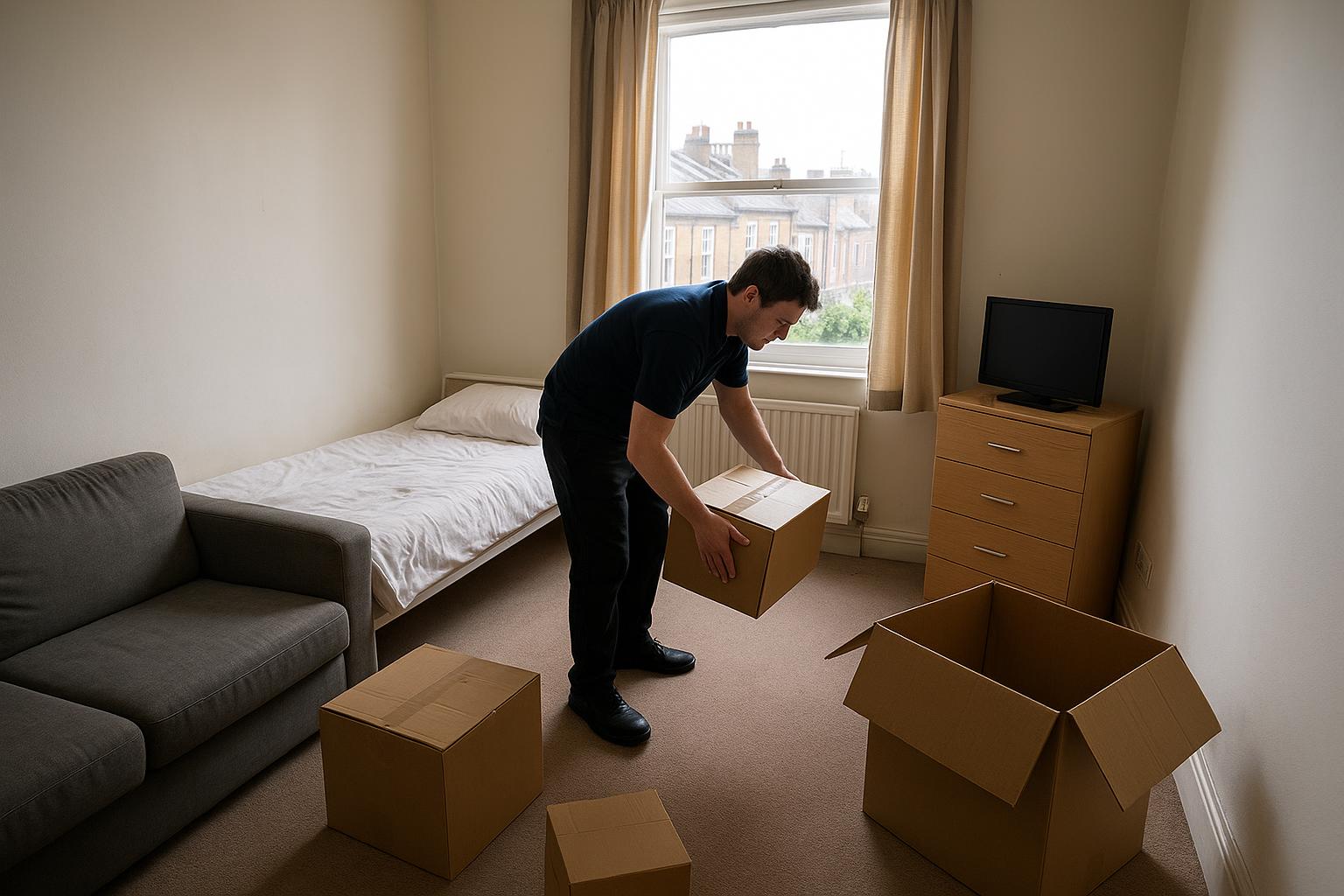
Landlords, tenants and tight deadlines
Studios are often cleared at the end of a tenancy.
Many studio clearances are the end of a tenancy or a sudden move, so the deadline matters. See our end of tenancy clearance guide and the same-day and urgent clearance cost guide. For larger flats, see the flat clearance cost guide and the pricing by volume guide.
Two worked examples of how a studio quote adds up
Illustrative arithmetic from our published ranges, not real customer jobs.
A studio flat looks simple, but the total still depends on what is inside it and where it is. The two scenarios below are made-up planning examples, not real jobs and not quotes. They add numbers from our prices page to show how a small-flat estimate is built. Carriers are independent businesses and may include some items in their base price, so always check what a quote covers.
Example A: a lightly furnished studio on the ground floor
Suppose a studio has a double bed, a small wardrobe, a coffee table and a few bags, with a ground-floor entrance and easy parking. The published range is £150 to £280, with a 200 kg weight allowance and 30 to 45 minutes of loading. A double or king mattress adds £45 to £65 where listed separately. The planning total is about £195 to £345, with no stair allowance.
Example B: a full studio on the fourth floor with no lift
Now suppose a studio with a sofa bed, a 2-seater sofa, an under-counter fridge, a washing machine and a small television, on the fourth floor of a walk-up. From the base range of £150 to £280, add £50 to £85 for the sofa, £45 to £70 for the under-counter fridge, £30 to £50 for the washing machine and £15 to £25 for a TV under 40 inches. Carrying down three flights adds roughly £90 to £180 at the published £30 to £60 per flight. That comes to about £380 to £690. If a sofa bed mattress needs its own surcharge, that comes on top.
| Line | Example A (ground floor) | Example B (4th floor, no lift) |
|---|---|---|
| Base studio range | £150 – £280 | £150 – £280 |
| Mattress | £45 – £65 | Not listed |
| Sofa | None | £50 – £85 |
| Fridge, washer and TV | None | £90 – £145 |
| Stairs without a lift | None | £90 – £180 (3 flights) |
| Planning total | £195 – £345 | £380 – £690 |
The same small room can cost more than double depending on stairs and appliances, which is why the height of the building matters so much. Use the figures to sense-check quotes, not to predict them.
Studios, bedsits and what is different about each
The label matters less than the layout, but a few points do change the job.
People use studio flat and bedsit almost interchangeably, but they can differ in ways that affect a clearance. A studio is usually a self-contained flat with its own kitchen and bathroom. A bedsit is often a single room in a larger house, sometimes with shared facilities, and sometimes still let furnished by a landlord.
- Furnished lets. If the room came furnished, check which items belong to the landlord before listing them for removal.
- Shared houses. Shared stairs, hallways and kitchens mean other residents are affected. Warn them and keep your items separate from theirs.
- Access. Bedsits in converted houses often have narrow stairs and no lift, so stair allowances are more likely to apply.
- Volume. The published range assumes a minimalist layout with basic white goods and no heavy carpets. Hoarded or heavily cluttered rooms are priced differently, as explained in the hoarding guide linked on the page.
In both cases the quote is built on what is in the space, not the label. Photographs of the whole room, including the bed, storage and any built-in units, are the quickest way to get an accurate figure.
If you only need part of a studio cleared
Single items and small loads have their own pricing.
Many studio jobs are not full clearances. You may be keeping the furniture and removing a mattress, or clearing a few boxes before a handover. Our prices page publishes a van-load table, and small fractions are the relevant rows for a studio.
| Load | Cubic yards | Black bin bags | Max weight | Indicative price |
|---|---|---|---|---|
| Single item minimum | 1 – 2 | 10 – 15 | 100 kg | £65 – £95 |
| 1/8 van | 2 | 20 | 150 kg | £95 – £135 |
| 1/4 van | 4 | 30 – 40 | 250 kg | £145 – £195 |
| 3/8 van | 6 | 50 – 60 | 375 kg | £210 – £265 |
| 1/2 van | 8 | 70 – 80 | 500 kg | £275 – £345 |
Our studio range of £150 to £280 sits between the quarter-van and half-van rows, consistent with the description of a studio as about a quarter to a half of a Luton van load. For the bigger picture of how van loads translate to price, see the pricing by volume guide. If it is a single item, the mattress disposal guide and sofa removal guide may be quicker to read.
Stairs, parking and building rules in small flats
Studios are often on upper floors in busy streets.
- Stairs without a lift. Many studios are in converted buildings. Our prices page notes typically £30 to £60 per flight, so a fifth-floor walk-up is a real cost.
- Controlled parking zones. Where a vehicle has to park on yellow lines, red routes or in a controlled zone, a visitor permit or council suspension fee of £35 to £90 per day may be needed, depending on the borough.
- Congestion Charge. The standard daily charge is £18 where it applies. Whether it affects the price depends on the vehicle, route and timing, so ask the provider rather than assuming.
- Building access. Some blocks restrict moving times or ask for notice. Check with the landlord, agent or concierge.
- Key handover. If you are not there, say who has keys and how the carrier will get in. Do not post keys through letterboxes without agreeing it.
A short note on floor, lift and parking in your post is worth more than a long list of items, because it gives the carrier what they need to price the access.
A checklist for a studio, area by area
A single room still has several zones.
- Sleeping area: bed frame, mattress, wardrobe and drawers. Check under the bed and inside storage divans.
- Kitchenette: empty the fridge and freezer, defrost in advance and clear cupboards. White goods carry disposal surcharges on the prices page, such as £45 to £70 for an under-counter fridge.
- Living space: sofa or sofa bed, desk, shelves and TV. Small electronics are £10 to £20 per unit, and flat screens under 40 inches are £15 to £25.
- Bathroom: remove toiletries and any cleaning chemicals, which may need separate handling.
- Storage and balcony: include cupboards, over-door shelving and any balcony items in the description.
Our house clearance checklist goes into more detail, and the hazardous household waste guide shows what counts as hazardous.
Clearing a studio as a landlord or agent
Left-behind belongings need care.
Studios are popular rentals, so many clearances are done by landlords and letting agents between tenants. Before you dispose of anything left behind, check your tenancy agreement and take legal advice on your position, because getting rid of someone else's goods too early can cause problems. This is general information, not legal advice. Take dated photographs and keep a list of what was removed. Our landlord and HMO clearance guide covers this in more detail, and the end of tenancy guide covers deadlines.
Ask the carrier for an invoice and waste transfer note so the file shows what was taken and when. The waste transfer notes guide explains the paperwork.
Cheaper alternatives to a full studio clearance
Not everything needs a private carrier.
A studio often holds a manageable amount, so it is worth asking whether part of it can leave by another route. Each option below has trade-offs in time, effort and certainty, and none of them is right for every item.
- Sell. Working furniture and electronics can sometimes be sold locally, but you must be able to wait for a buyer and arrange collection, which is hard with a tenancy deadline.
- Donate. Reuse charities may take clean, good-condition furniture, but many cannot accept upholstered items without the right safety labels. See our furniture donation guide and check first.
- Council bulky waste. Many councils collect single large items for a fee, but you usually must book, wait and put items outside. See council versus private clearance.
- Take it to a recycling centre yourself. This works if you have a vehicle and the centre accepts your items, but many London centres restrict van access and some items need a booking.
- Private carrier. The fastest option when you need a specific time slot, the items taken from inside, and the room left clear.
A sensible mix is common: donate or sell what has value, then use a carrier for the rest. That reduces the volume you pay to remove, and the single-item minimum on the van-load table is the floor for the remaining load.
Why people clear a studio, and what it means for timing
The reason changes the deadline and the paperwork.
- End of tenancy. The deadline is fixed by the agreement, so time slots matter and short notice can raise the quote.
- Moving abroad or in with a partner. You usually have a few weeks, so you can sell and donate before the clearance.
- Bereavement. A studio may belong to someone who has died. There can be legal and emotional steps first. See the bereavement guide.
- Sale or letting. A studio being sold or relet needs to be empty for viewings or a handover date.
- Student and short-term lets. Terms end on fixed dates and many people leave at once, so booking early helps.
If the date is tight, read our same-day and urgent clearance cost guide. Early booking usually gives you more quotes to choose from.
Common mistakes with studio clearances
Small spaces still catch people out.
- Not mentioning the floor and the lack of a lift, so the quote is revised on the day.
- Forgetting storage under a raised bed, over-door shelving or the balcony.
- Assuming the landlord's furniture can be removed with yours.
- Leaving valuables, jewellery and papers in drawers.
- Not defrosting the freezer, so the fridge leaks in the stairwell.
- Not arranging parking, leaving the crew unable to load.
- Choosing a carrier without checking their waste carrier registration.
A short prepared list avoids most of these problems.
What the published allowances actually mean
Weight, time and crew size explain why small jobs are priced the way they are.
Our prices page builds each property range on three assumptions: a standard two-person loading team, a weight allowance and a loading time. For a studio flat that means up to 200 kg and 30 to 45 minutes of loading, with a minimalist layout, basic white goods and no heavy carpets. Weight is a useful way to think about it, because a single fridge or sofa can use a large share of 200 kg on its own.
If your studio holds heavier items such as a large wardrobe, a washing machine and a solid wood desk, the weight allowance can be reached before the room looks full. A quote above the range is not necessarily a sign of a poor deal, but it is worth asking what has been assumed. Equally, a quote far below the range may be missing something, such as surcharges or stairs. Ask each carrier to confirm the scope in writing, so that you are comparing the same job. The baseline also includes the local disposal gate fees, which is why prices are not simply the cost of a van and driver.
Studios in London are found in every borough, from converted houses in outer areas to purpose-built blocks in the centre, and the carriers we work with cover all 32 boroughs and the City. Your postcode determines which carriers see your job.
Comparing studio clearance quotes
Small jobs hide big differences.
| Check | Why it matters |
|---|---|
| Minimum charge | Small jobs may be priced at or near the single-item minimum of £65 to £95 |
| Surcharges | Mattress, sofa, fridge and TV listed as included or extra |
| Stairs | Allowance for your floor if there is no lift |
| Parking | Whether a permit or suspension is assumed |
| VAT | Whether VAT applies, since carriers are independent |
| Paperwork | Invoice and waste transfer note provided |
Our licensed company guide explains how to check registration, and you can accept or decline any quote freely.
Disposal and your responsibility
Make sure the waste goes where it should.
Even for a small job, you should use a carrier registered to carry waste. The government explains waste carrier registration, and the public register lets you check a number. Cheap unregistered operators are linked to fly-tipping, and waste traced back to a household can become that household's problem. Keep your invoice and ask for a waste transfer note. Our invoices and records guide explains why.
What happens on the day
A typical timeline for a studio.
- Arrival. Be available or arrange access, and point out anything you are keeping.
- Loading. The published time is 30 to 45 minutes for a minimalist studio. A fuller one takes longer.
- Check. Look in every cupboard and drawer and under the bed.
- Payment and paperwork. Agree any change to the price before work is done, and collect the invoice and waste transfer note.
How to prepare a studio clearance
Quick steps to get an accurate price.
- Take photos of every area, including cupboards and any storage.
- List large items such as the bed, sofa bed, wardrobe and appliances.
- Say which floor it is on and whether there is a lift.
- Set aside anything to keep, and check drawers and shelves for personal papers.
Our house clearance checklist covers before, during and after.
How the process works, start to finish
Three steps from description to collection.
Describe the job
Say what is in the studio and what must go, roughly how much there is and anything you want to keep.
Add access and timing
Mention the floor, lift, parking and your deadline.
Get a carrier quote
Post the job, compare licensed carriers' quotes and choose, with no obligation to accept.
Frequently asked questions
How much does a studio flat clearance cost in London?
Our prices page gives an indicative £150 to £280. The real price is the quote you receive.
How long does a studio flat clearance take?
Typically 30 to 45 minutes of loading for a light studio, longer for a full one.
Is a bedsit cheaper than a studio?
They are usually similar. The price depends on how much is in the room, not the label.
Do I need to be there?
Usually someone should be present or arrange access. Say so in your post.
What if the flat is on the fifth floor with no lift?
Stairs typically add about £30 to £60 per flight, so it can add noticeably. Tell the carrier.
Can I add a mattress and fridge?
Yes. They carry disposal surcharges, which the carrier will include in the quote.
Can I clear just a mattress and wardrobe from a studio?
Yes. That is a small load, priced from the single-item minimum of £65 to £95 on our prices page, plus any mattress surcharge.
Does a sofa bed count as a sofa or a bed?
Carriers decide based on the item. Describe it and give photos so the quote includes the right surcharge.
What if the bedsit is in a shared house?
Tell the carrier about shared access, other occupants and any restrictions on times, and keep your items separate.
Will the carrier clean the flat?
Clearance is not cleaning, though many carriers sweep the floor. Book a separate end of tenancy clean if you need it.
Is it cheaper to clear in the morning?
Not necessarily. Price depends on your volume, access and timing, and a fixed slot can cost more.
What if I cannot be there?
Arrange key access and give the carrier a contact number. Say so in your post.
Ready to see your price?
Post your studio flat clearance for licensed carriers to quote on.