
Direct answer
Removing a sofa in London typically costs about £40 to £60 for an armchair, £70 to £90 for a 2-seater and £100 to £140 for a 3-seater or corner sofa, including the disposal charge. Those are indicative ranges, not a fixed rate card: houseclearance.co publishes the disposal surcharge on /prices/, and a licensed carrier quotes the real price for your sofa, stairs and access.
Contents
- What sofa removal costs in London
- Worked examples: how the numbers add up
- Sofa types and how each one is handled
- What moves the price up or down
- Why sofas carry a disposal charge
- London access: stairs, lifts, parking and zones
- Your options for getting rid of a sofa
- Comparing your routes side by side
- How to prepare a sofa for collection
- What to check when you compare sofa quotes
- Your legal duty as the person getting rid of the sofa
- Common mistakes that cost people money
- How the process works, start to finish
- Frequently asked questions
What sofa removal costs in London
Indicative ranges, not a rate card: the final figure is always a carrier quote.
A sofa is one of the most common single-item collections. It is bulky, awkward on stairs and charged for at disposal, because upholstered furniture is handled separately from ordinary waste. The ranges below are indicative for a sofa-only collection in London, including the disposal charge. Our prices page lists the disposal surcharge separately, which is the part of the figure that pays for disposal.
| Item | Typical collection price | Disposal surcharge within that (from /prices/) |
|---|---|---|
| Armchair | £40 – £60 | £35 – £55 |
| 2-seater sofa | £70 – £90 | £50 – £85 |
| 3-seater or corner sofa | £100 – £140 | £65 – £110 (3-seater) |
These are planning figures, not a promise of a price. A corner sofa is closer to the top of the range than a 3-seater, and a second item in the same visit usually costs less than a separate trip.
Worked examples: how the numbers add up
Illustrative arithmetic using the ranges above, not real jobs or real quotes.
It helps to see how the ranges combine before you post. The three scenarios below are made-up planning examples built only from the indicative figures in this guide and the published ranges on our prices page. They are not records of real customer jobs, and a carrier's quote may be higher or lower.
Scenario 1: one 3-seater, ground floor flat
Indicative collection price for a 3-seater is £100 to £140. With ground-floor access and a van that can park close by, there is no stair supplement, so a sensible planning figure is the range itself. If the building has a communal door you have to hold open, mention it, but it should not change the figure much.
Scenario 2: a 3-seater and an armchair, second floor, no lift
The two items added together would be about £140 to £200 on separate pricing (£100 to £140 plus £40 to £60). Our prices page says carrying down stairs without a lift typically adds about £30 to £60 per flight, and a second-floor flat is usually two flights, so the stairs could add roughly £60 to £120. A planning total of about £200 to £320 is therefore realistic before any saving for a combined visit. Because both pieces go in the same trip, a carrier will often quote below the sum of separate prices, which is why posting everything together matters.
Scenario 3: a corner sofa that must be dismantled
A corner sofa sits at the top of the range, about £100 to £140 or slightly above. If the sections will not separate or the frame will not turn through the doorway, a carrier may need extra time and a second person. Tell them what you know about how it was delivered: a sofa that came in through the same door usually goes out through it.
Notice that the stair supplement and the number of items move the total more than the sofa itself in scenarios 2 and 3. That is the main reason to describe access carefully rather than only the item.
Sofa types and how each one is handled
Different construction means different handling and sometimes different disposal.
Not every sofa is the same job. The type you have changes the number of people needed, the time on site and sometimes how the piece is processed afterwards.
- Standard fabric 2- and 3-seaters. The most common case and the one the ranges above are built around. They are heavy but usually turn through a doorway on their side.
- Corner and L-shaped sofas. Often supplied in sections that split apart. If the sections are joined by brackets underneath, a carrier can usually separate them quickly, which makes carrying easier and safer.
- Modular sofas. Each module is lighter than a full sofa but there are more pieces to carry, so the time on site rises with module count.
- Recliners and electric reclining sofas. The mechanism adds weight. Mention if it is electric and whether it can be unplugged and moved into the closed position.
- Leather and faux leather. Leather is heavy and slippery to grip on stairs. The disposal route is the same as fabric from a booking point of view, but say what it is so the carrier can plan.
- Sofa beds. A fold-out frame is dense and heavy. We cover these separately in our sofa bed removal guide.
- Large or antique pieces. A Chesterfield-style or solid-framed piece can be much heavier than its appearance suggests, so give an honest size and the floor it is on. If it has resale value, see the options section above and the furniture donation guide.
What moves the price up or down
Size, stairs, access and what else is going.
- Size and weight. Corner sofas, recliners and sofa beds are heavier and need more people. See our sofa bed removal guide.
- Stairs. Our prices page notes that carrying down stairs without a lift typically adds about £30 to £60 per flight.
- Doorways and turns. If a sofa will not fit through a door or round a stair turn, tell the carrier. It may need to be dismantled, which takes time.
- Other items. Add the mattress, armchair or other bulky items to the same job. The furniture and bulky item removal cost guide explains how combined loads are priced.
Why sofas carry a disposal charge
Upholstery is treated differently from ordinary rubbish.
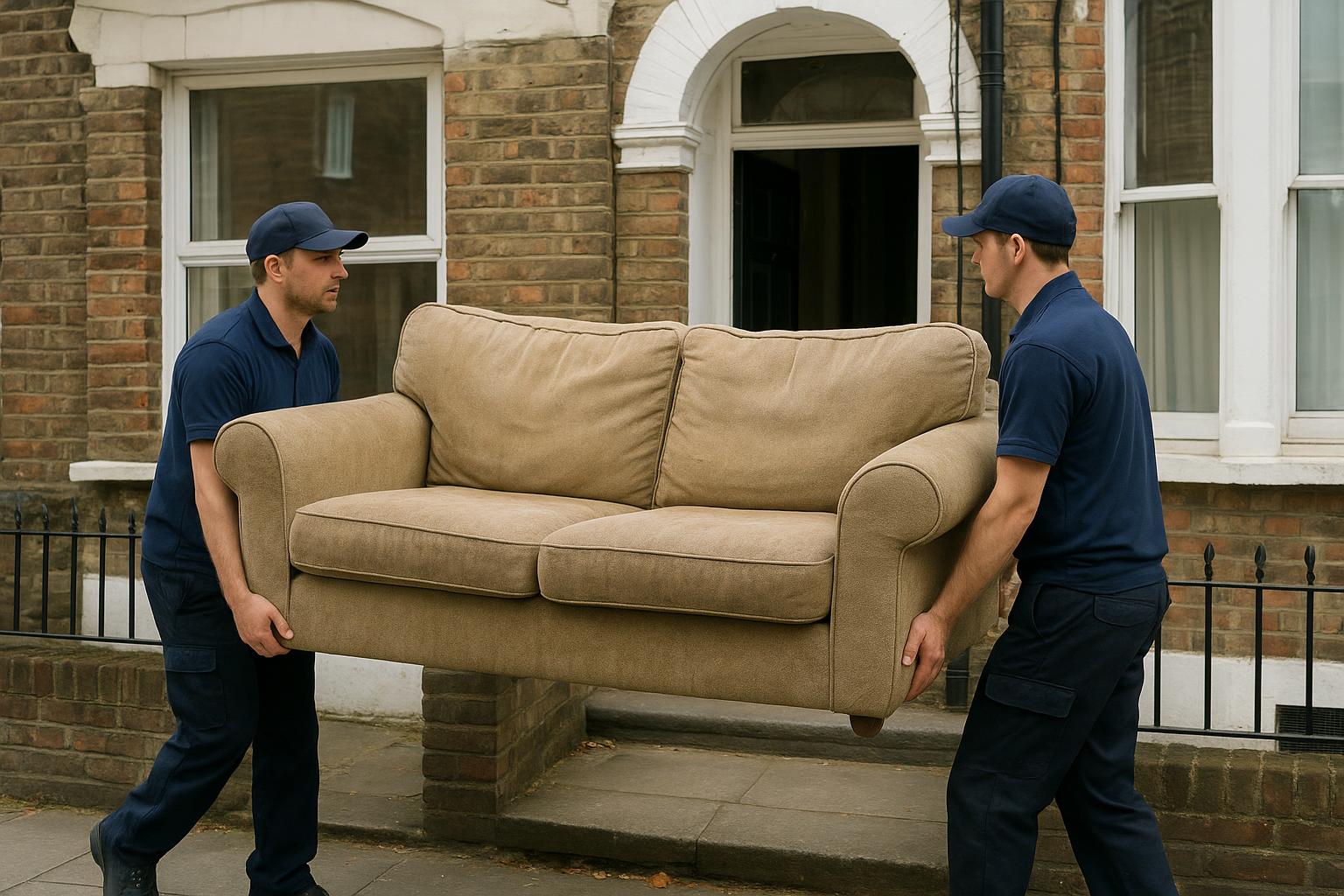
The disposal charge on a sofa is not a carrier's profit margin. Our prices page explains that upholstered items made before updated environmental standards can contain persistent organic pollutants, and that these cannot be mixed with general municipal waste. Disposal sites that accept them therefore charge a gate fee, and licensed carriers pass that fee into the quote. The published figures are about £35 to £55 for an armchair, £50 to £85 for a 2-seater and £65 to £110 for a 3-seater.
Two practical points follow. First, a very cheap or free offer for removal should prompt a question about where the sofa will end up, because the disposal cost does not disappear. Second, the charge applies to the item rather than to the time, so a quick job does not mean a low figure for an upholstered piece.
Sofas sold in the UK have to meet fire safety rules for domestic upholstery, and this is why a label is normally sewn under a cushion or on the frame. Charities that take furniture often ask to see it. If you plan to donate, check for the label before you book anyone. Our guide to furniture donation in London covers the common conditions.
London access: stairs, lifts, parking and zones
Where you live changes the job more than most people expect.
London housing is varied, and so is access. A sofa leaving a ground-floor Victorian terrace with a wide front door is a very different job from the same sofa leaving a third-floor conversion with a narrow turn on the stairs. These are the points carriers usually ask about.
- Conversion flats and terraces. Narrow staircases with a turn at the half-landing are the classic problem. Measure the sofa and the tightest point, and say if you know how it came in.
- Mansion blocks and purpose-built blocks. A lift saves a lot of effort, but check whether it is a passenger lift with size limits, and whether the building requires lift booking or a protective covering.
- New-build developments. Some have loading bays, concierge arrangements or restricted collection hours. Tell the carrier in advance so they are not turned away on the day.
- Parking. Our prices page notes that if a carrier has to park in a controlled parking zone or on a red route, you may need to supply a visitor permit, or a council suspension fee of about £35 to £90 per day can be built into the quote, with central boroughs such as Westminster and Kensington and Chelsea given as examples.
- Congestion Charge and ULEZ. The standard TfL Congestion Charge is £18 when applicable, and whether it affects your quote depends on the vehicle, route, time and what the provider has included. Check current TfL guidance and confirm with the provider. See also our London congestion zone tips.
None of these are surprises if you mention them when you post. They only become a problem when a crew arrives and discovers that the sofa will not turn the corner or that there is nowhere to stop the van.
Your options for getting rid of a sofa
Council, donation, private collection.
Many London councils collect sofas as bulky waste for a fee, but you usually have to book, put the item out and wait. See what the council charges to remove a sofa and our council versus private clearance comparison. If the sofa is in good condition, a reuse charity may take it: check the rules in our furniture donation guide and how to get rid of a sofa for free. A private carrier is the quickest option when you want a set time, the item taken from inside your home and the area left clear.
Comparing your routes side by side
A quick view of the main ways to get a sofa out of the house.
The table compares the usual routes qualitatively. It deliberately avoids invented prices: where the council or a charity sets a fee or rule, check it with them directly, and use the guides linked in this page for detail.
| Route | Collected from inside? | Speed | Main catch |
|---|---|---|---|
| Council bulky waste collection | Often no: item usually has to be put out | Booking slot, can take days or weeks | Fee and booking rules vary by borough; see our council sofa charge guide |
| Charity or reuse scheme | Sometimes | Depends on their diary | Only clean sofas in good condition, with the right labels; see how to get rid of a sofa for free |
| Retailer take-away when buying new | Often yes, at delivery | Tied to the delivery date | Offered by some retailers only, so check terms before you order |
| Private licensed carrier through a platform | Yes, normally | Often within days, set time window | You pay a quote that includes the disposal charge |
| Taking it yourself to a recycling centre | You carry it | Whenever you can | Needs a suitable vehicle, and some centres have rules or limits on size and vehicle type |
For most London flats the practical choice comes down to timing and access. If you can wait and can carry the sofa to the kerb, the council route may be cheaper. If you need the item out by a set date, or it is on an upper floor, a private carrier is usually the more realistic option. Our council versus private clearance guide goes through the trade-offs in more detail.
How to prepare a sofa for collection
A few minutes of preparation avoids surprises on the day.
- Check under the cushions and in the frame for keys, cards and cash.
- Remove loose covers and any items on top of or inside storage sofas.
- Measure the doorway and stairs if access is tight, and mention it when you post.
- Clear the route to the door and say where a vehicle can park.
Our bulky item preparation guide has a fuller checklist.
What to check when you compare sofa quotes
Quotes are only comparable if they cover the same scope.
When several licensed carriers respond to your job, the cheapest number is not always the best offer. Before you accept, confirm the following.
- What is included. Does the figure include the disposal charge, stairs, parking and any dismantling, or are some of those extras?
- Arrival window. A specific time window is more useful than a vague morning or afternoon, especially in a building with restricted access.
- Number of people. Heavy or large sofas on upper floors usually need two people. Confirm that is what is quoted.
- Waste carrier registration. Anyone who carries waste for others should be a registered waste carrier. You can read about this on the government's waste carrier registration page, and our guide to choosing a licensed clearance company explains what to ask for.
- Cancellation and change terms. If the sofa turns out not to fit through the door, what happens to the price?
Remember that you are not obliged to accept any quote. You can compare, ask follow-up questions and choose the carrier whose terms you understand.
Your legal duty as the person getting rid of the sofa
You are responsible for what happens to your waste after it leaves your home.
In England, anyone who produces household waste has a duty of care to pass it only to someone authorised to take it. In practice that means a council service, a registered waste carrier or an organisation that is genuinely reusing the item. If a sofa is handed to an unlicensed collector and later dumped, the trail can lead back to the householder. Our householder duty of care guide explains this in plain terms, and the general background to illegal dumping is on the page about fly-tipping.
The simple protections are to use a registered carrier, to keep the booking message or confirmation, and to avoid anyone who will only agree a price at the kerb with no paperwork. Our licensed company guide lists the questions worth asking.
Common mistakes that cost people money
Most extra charges come from missing information, not from the sofa.
- Only describing the sofa. Leaving out the floor, the lift or the parking leads to a revised price on the day.
- Leaving items on or in the sofa. Storage sofas and pull-out beds often hide bedding or personal items.
- Assuming it will fit. A sofa that was moved in years ago may have come through a window or been assembled in the room. Measure the exit route, not just the item.
- Booking two trips. Collecting a sofa now and an armchair next month means paying a minimum twice. Group the items.
- Ignoring donation rules. Booking a charity pick-up and then discovering the label is missing can leave you scrambling for a second option.
- Going purely on price. A very low offer that does not name a waste carrier registration is a risk.
How the process works, start to finish
Three steps from description to collection.
Describe the job
Say what type of sofa it is, roughly how much there is and anything you want to keep.
Add access and timing
Mention the floor, lift, doorways and where a vehicle can park.
Get a carrier quote
Post the job, compare licensed carriers' quotes and choose, with no obligation to accept.
Frequently asked questions
How much does it cost to remove a sofa in London?
Indicatively £40 to £60 for an armchair, £70 to £90 for a 2-seater and £100 to £140 for a 3-seater or corner sofa. The real price is the quote you receive.
Why do I have to pay a disposal charge for a sofa?
Upholstered furniture is handled separately at disposal sites and charged for. Collectors pass that on, which is why our prices page lists a sofa disposal surcharge.
Can a carrier take the sofa from inside my flat?
Yes. A private carrier will normally collect from inside the property, unlike most council services that need the item put outside.
Is it cheaper to remove two sofas together?
Usually per item, yes, because travel and loading time is shared. Post everything together so the quote covers the full scope.
What if the sofa will not fit through the door?
Tell the carrier when you post. It may need to be taken apart, which can take extra time and affect the price.
Can I donate my old sofa instead?
Sometimes. Reuse charities may take clean sofas in good condition with the right fire safety labels, but rules differ, so check before arranging collection.
What is the cheapest legitimate way to get rid of a sofa in London?
It depends on your situation. A council bulky waste slot or a charity pick-up of a good sofa can cost less than a private carrier, but you may have to wait, put the item outside or meet conditions. A private carrier costs more but is faster and takes the item from inside your home.
Does the sofa price include the disposal charge?
The indicative ranges in this guide include it. Always check that your actual quote states whether the disposal charge, stairs and parking are included.
How many people are needed to remove a sofa?
Usually two for a 3-seater, corner sofa or anything on an upper floor. An armchair may be a one-person job on the ground floor. The quote should say how many people are coming.
What should I do if I cannot lift the sofa to the door myself?
You do not need to. A carrier collects from inside the property. Just clear a route and make sure the door and any lift are accessible.
Do I need to be at home during the collection?
Someone needs to give access and confirm which items are going. Agree with the carrier whether that can be a neighbour, concierge or building manager.
Ready to see your price?
Post your sofa removal job for licensed carriers to quote on.