
Direct answer
Hot tub removal in London typically costs about £250 to £450, and removing a standard uPVC and glass conservatory about £800 to £1,800. Those are indicative ranges, not a fixed rate card, and a licensed carrier quotes the real price after seeing photos or the site. Size, access, electrics, roof material and whether the base is included change the figure.
Contents
- What conservatory and hot tub removal costs in London
- Hot tub removal: what changes the price
- Conservatory removal: what changes the price
- What happens to the waste
- Skip, grab hire or a dedicated removal
- Types of hot tub and conservatory, and why the type matters
- Worked examples: reading the indicative ranges
- Preparing the site before the carrier arrives
- What a good quote should include
- London factors: gardens, access, boroughs and neighbours
- Safety, waste duty and legal context
- Reuse, resale and recycling before you scrap
- How to get a sensible quote
- Frequently asked questions
What conservatory and hot tub removal costs in London
Two very different jobs, priced by size and access.
Hot tubs and conservatories are both bulky garden structures, but they are priced differently. A hot tub is a single heavy item that has to be drained, disconnected and carried or cut out. A conservatory is a demolition job involving glass, frames, a roof and often a base. The ranges below are indicative for London.
| Job | Indicative cost | What it depends on |
|---|---|---|
| Hot tub: disconnect, dismantle and remove | £250 – £450 | Size, weight, how it is wired and plumbed, access to the garden |
| Standard uPVC and glass conservatory: dismantle and remove | £800 – £1,800 | Size, roof type, base, access and whether it is attached to the house |
These are planning figures, not a rate card. Our prices page does not publish a conservatory or hot tub figure, so treat these ranges as a guide and rely on the quotes you receive. A site visit or clear photographs let a carrier give a firm price.
Hot tub removal: what changes the price
Weight, water, electrics and access.
- Draining. A hot tub holds a large volume of water, and it has to be drained safely before it can be moved. Say whether you have a drain, pump or hose route away from the tub.
- Electrics. Many hot tubs are on a hard-wired supply. A qualified electrician should disconnect it and make it safe before removal, so arrange that first.
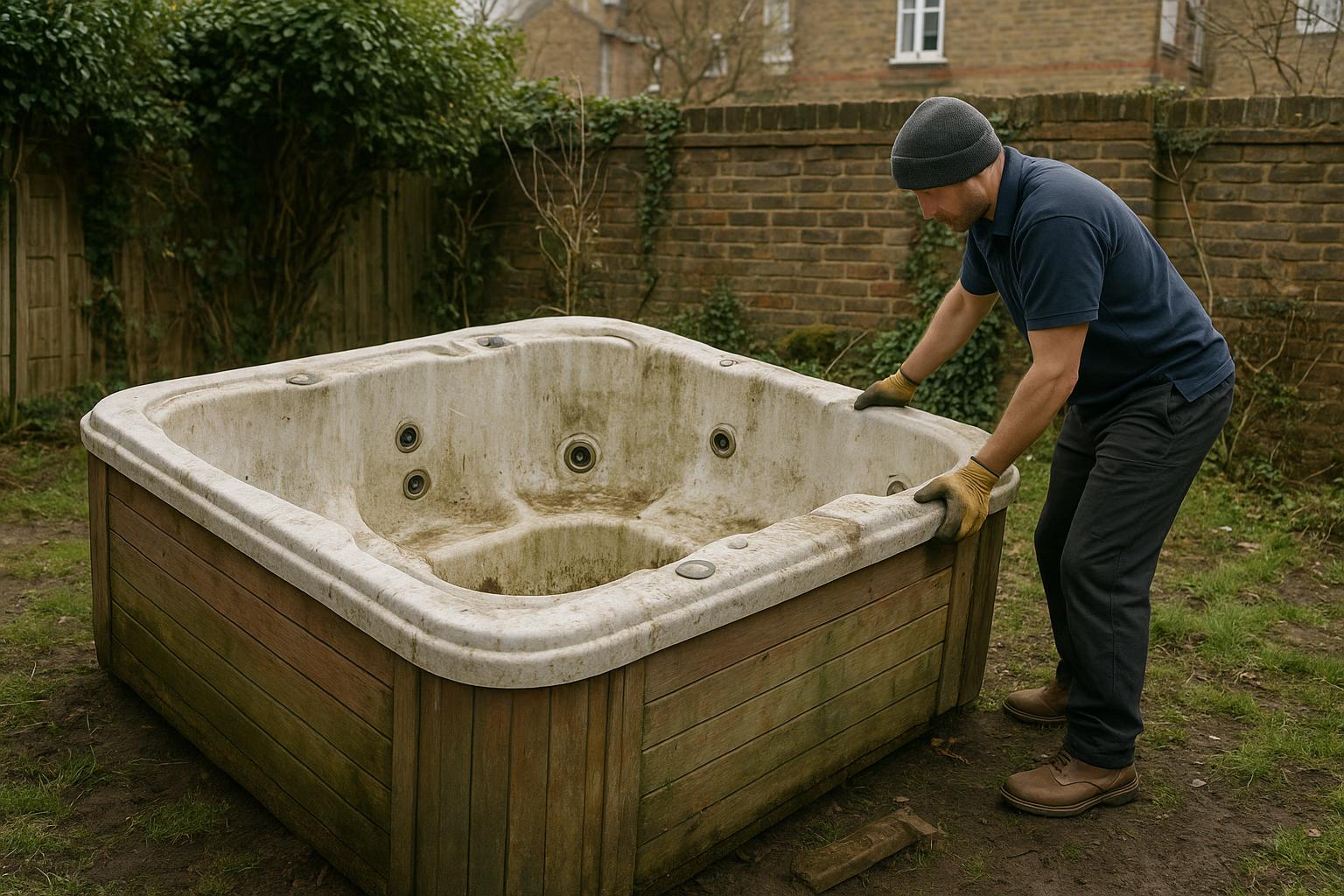
- Size and weight. A rigid acrylic tub can weigh several hundred kilograms empty and may need several people. Some are cut up on site if they cannot be carried out.
- Access. Side passages, gates, steps and a long carry to the van add time. Measure the narrowest point and tell the carrier.
- Type. An inflatable or plug-in tub is far simpler and cheaper to remove than a built-in or sunken one.
If you are replacing the tub, ask the new supplier whether they take the old one away, as some do for a fee.
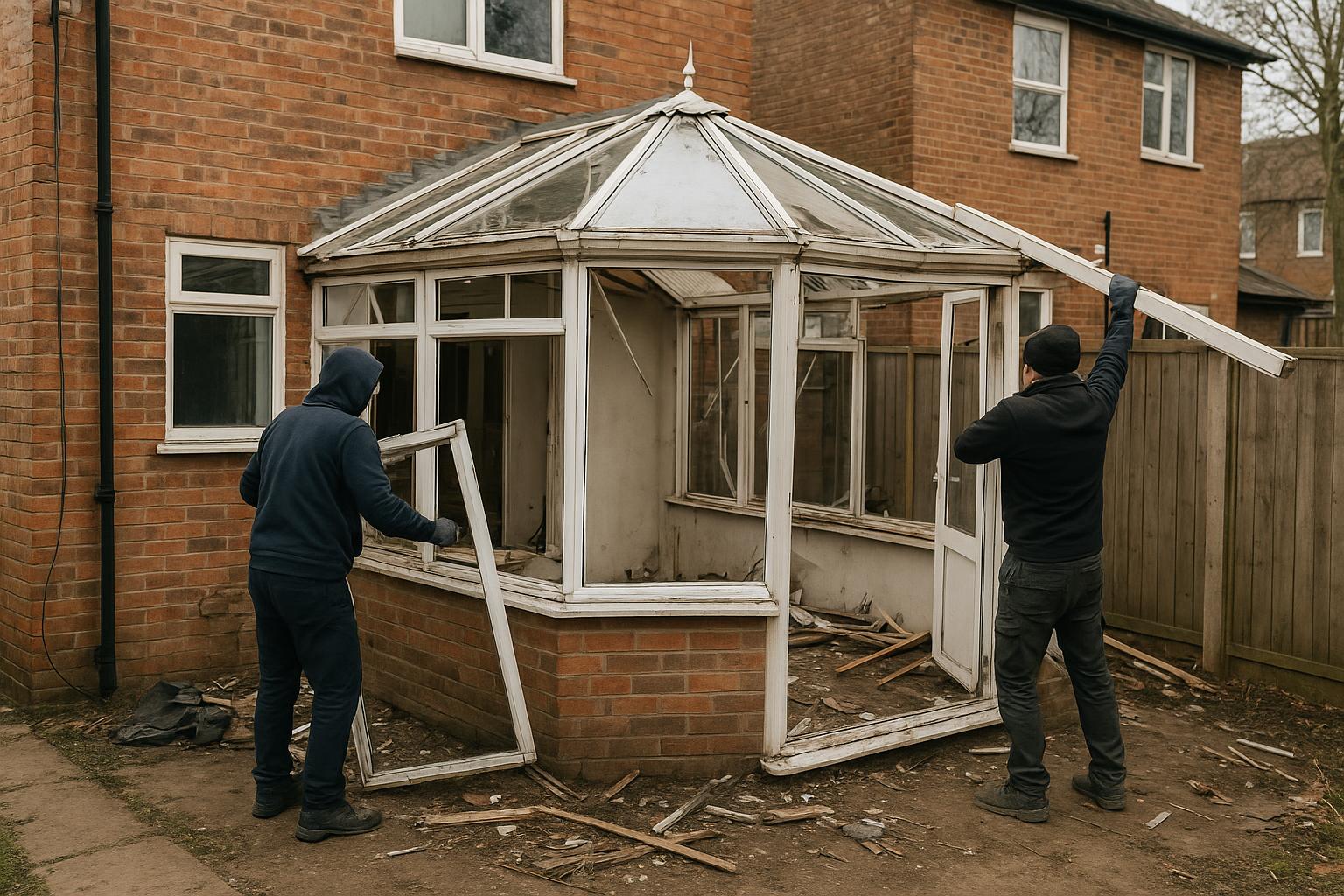
Conservatory removal: what changes the price
Roof, glass, base and the house wall.
- Size and design. A small lean-to is much quicker to take down than a large Victorian or P-shaped conservatory.
- Roof material. Glass, polycarbonate and tiled roofs are handled differently. Older corrugated roofing may contain asbestos and must be tested before it is touched. See our asbestos removal cost guide.
- Base and walls. Some quotes cover only the frame and glazing. Removing a brick dwarf wall, concrete base or foundations is extra and produces heavy rubble. See our bricks and rubble guide.
- Attachment to the house. Where the conservatory meets the house wall, the opening may need making good, and any doors or windows between the two may need checking.
- Services. Electrics, heating and gas supplies should be isolated by a qualified person before demolition.
Check with your council if you are in a conservation area, in a listed building or a leaseholder, because rules and permissions can apply. A good contractor will ask about these when quoting.
What happens to the waste
Glass, frames and foam are separated where possible.
A conservatory produces glass, uPVC or aluminium frames, roofing, bricks and rubble, and sometimes timber. Responsible carriers sort these, recycle what they can and take the rest to licensed sites. A hot tub is harder to recycle because of its mixed shell, foam insulation and pumps, though parts such as metals and pumps can sometimes be recovered. Ask the carrier where the waste is going and for a waste transfer note if you want one. See our waste transfer notes guide and the responsible disposal page.
Because these are large jobs, check the carrier's registration. Our waste carrier licence page, the householder duty of care guide and the fly-tipping penalties guide explain why.
Skip, grab hire or a dedicated removal
Comparing the routes for a bigger job.
For a conservatory you can sometimes dismantle the frame yourself and hire a skip for the waste, but glass and roofing are risky to handle, and heavy rubble needs the right container. See the skip hire cost guide, the mini skip guide and the grab hire guide. For a full dismantle and removal, a licensed carrier is usually safer and quicker.
If the job is part of a wider garden or building project, the garden clearance cost guide, the builders and renovation waste guide and the house clearance cost guide explain how those jobs are priced, and the garden clearance service covers the service.
Types of hot tub and conservatory, and why the type matters
The same word covers very different jobs.
Quotes for these jobs vary widely because the words hot tub and conservatory cover products with very different construction. Describing yours accurately is the quickest way to a sensible figure. The table below sets out the main types and the questions each one raises.
| Type | What it is | What the carrier will want to know |
|---|---|---|
| Inflatable or plug-in hot tub | Soft-sided, lightweight, runs from a normal socket | Whether it is drained, and how it will be folded and carried out. |
| Rigid acrylic hot tub | Moulded shell with insulation, pump and cabinet | Weight, width, gate and passage widths, and whether it is wired to a fused supply. |
| Sunken or built-in tub | Set into decking or the ground | Excavation, surrounding decking and how much rubble or timber will result. |
| Lean-to conservatory | Single-slope roof against the house wall | Roof material, frame material and how it joins the house. |
| Victorian, Edwardian or P-shaped conservatory | Multi-faceted, often larger, sometimes on brick dwarf walls | Number of facets, roof glass or polycarbonate, brick walls and base. |
| Orangery or timber-framed structure | Heavier build with brick piers or a flat roof lantern | Whether it counts as a conservatory or a building extension, and what the roof is made of. |
Our indicative ranges (£250 to £450 for a hot tub, £800 to £1,800 for a standard uPVC and glass conservatory) are for the common cases, not the largest or most complex. A big orangery or a sunken tub with decking should be quoted individually, with photos and ideally a site visit. As the prices page does not publish a figure for these two jobs, take the ranges as planning guidance only.
Worked examples: reading the indicative ranges
Illustrations built only from the figures above. These are not real jobs or quotes.
The scenarios below show how the factors in this guide combine. They are hypothetical and use only the ranges already given on this page, so use them to understand the logic rather than to predict a price.
Scenario 1: an inflatable tub on a patio
A plug-in inflatable tub, drained by the owner, with a short carry from the patio to the road, is the simplest case. It would sit at the lower end of the hot tub range or possibly below it, because there is no electrician, no heavy shell and little time on site. Telling the carrier it is inflatable is the biggest single saving.
Scenario 2: a rigid tub down a narrow side passage
A rigid tub is heavy and wide, and the side passage may be narrower than the shell. The carrier may need extra people, may lift it over a fence or may cut it up on site. This pushes towards the upper end of the £250 to £450 range, particularly if an electrician has not yet isolated the supply.
Scenario 3: a conservatory with a brick base
A standard conservatory quoted at the £800 to £1,800 range usually covers the frame, glazing and roof. If the brick dwarf wall and concrete base are also to go, the job gains heavy rubble and more labour, and a carrier may quote separately for that part. Ask whether the figure includes the base, and compare like for like.
Scenario 4: a tub and conservatory in the same garden project
If both are going at the same time, one carrier visit may be more efficient than two, but they still need different equipment and skills. Post the two items in the same job and ask the carrier to itemise them, so you can see how the total is built.
Preparing the site before the carrier arrives
What you can do to keep the quote and the day on track.
For a hot tub
- Arrange for the water to be drained safely and for any hard-wired electrics to be isolated by a qualified electrician.
- Clear cushions, covers, steps and chemical containers, and keep anything you want to keep separate.
- Measure the narrowest point between the tub and the road, including gates, steps and any turns.
- Tell the carrier if the tub is sunken or surrounded by decking, because the surrounding structure may also need to be removed.
For a conservatory
- Empty it of furniture and plants, and take down blinds and curtains.
- Arrange for electrics, heating and any radiators to be isolated or removed by a qualified person. See our radiator removal guide.
- Photograph the roof, the frame, the join to the house and the base, and note whether the roof panels are glass, polycarbonate or older sheeting.
- If the roof is old corrugated sheeting, do not disturb it until it has been tested. The asbestos removal cost guide explains testing.
- Check access for a skip or van and any parking restrictions on your street.
A well-prepared site shortens the visit, reduces the chance of disputes about what was included, and makes it easier to compare quotes. Our bulky item preparation guide has a wider checklist.
What a good quote should include
Line items to look for, so quotes can be compared like for like.
| Item to check | Why it matters |
|---|---|
| Hot tub draining and disconnection | Some carriers expect this done in advance, others will do it. It changes the scope. |
| Electrician requirement | A hard-wired tub should be isolated by a qualified person, so confirm who arranges it. |
| Conservatory base, dwarf walls and foundations | Often extra, and the main source of surprise cost. |
| Roof material and testing | Older sheeting may need testing before anyone touches it. |
| Making good at the house wall | Removing a conservatory can leave an exposed wall and openings that need finishing. |
| Waste handling and paperwork | Ask where the glass, frames and rubble go, and whether you will receive a waste transfer note. |
| Carrier registration | The carrier should be a registered waste carrier. You can check this before accepting. |
| Timing and access | Skip or van placement, any parking suspension, and how many people will attend. |
Compare the scope line by line and not only the headline figure. A low quote that leaves out the base, the rubble or the draining can turn out dearer than a higher quote that includes them. Ask each carrier to put exclusions in writing. Our waste carrier licence check page explains how to verify registration, and the licensed clearance company guide covers what else to look for.
London factors: gardens, access, boroughs and neighbours
Where a London garden differs from the typical suburban plot.
A great deal of London housing is terraced or semi-detached with side alleys, narrow gates and small rear gardens, so access is often the deciding factor in price. The points below come up repeatedly in London garden structure removals.
- Side passages and shared alleys. A conservatory's glass, or a rigid tub, may have to be carried the whole length of a narrow passage. Measure it and mention any shared access with neighbours.
- Parking and charges. Our prices page notes a Congestion Charge allowance of £18 where it applies and parking-suspension fees of £35 to £90 per day depending on the borough. A skip on a public road may need a council permit, so see our skip permit cost guide.
- Leasehold and conservation areas. If you are a leaseholder, in a conservation area or in a listed building, check with your landlord, freeholder or council about permissions before work starts.
- Neighbours and party walls. Where a conservatory touches a shared boundary, tell neighbours in advance, and take advice if the structure is attached to a party wall.
- Noise and working hours. Demolition is noisy and councils set limits on working hours, so ask the carrier about timing.
For wider garden jobs, see the garden clearance cost guide and the skip hire prices by size guide. If you are rebuilding the same space, the builders and renovation waste cost guide shows how that waste is priced.
Safety, waste duty and legal context
What a householder needs to know without becoming an expert.
Both jobs are physically risky, and both produce a lot of waste. Some points are worth knowing before you hire anyone.
- Glass and roofing. Broken glazing and sheet roofing are a cutting and falling hazard. Do not attempt to take a conservatory roof apart without the right equipment and experience.
- Asbestos. Buildings and extensions from before 2000 may contain asbestos in roof sheeting or panels. You cannot tell by looking. Get a suspect material tested first.
- Duty of care. Householders in England have a duty to check that whoever takes waste away is a registered carrier. See the householder duty of care guide.
- Fly-tipping. A careless contractor who dumps the glass and frames can leave you with responsibility. Read the fly-tipping penalties guide.
- Paperwork. Ask for a waste transfer note and keep it. See the waste transfer notes guide and our guide to invoices and records.
These are general points, not legal advice. If you are unsure about permissions for a structure attached to your home, speak to your council or a qualified professional.
Reuse, resale and recycling before you scrap
Value can sometimes be recovered, but be realistic.
A hot tub in working order, or a conservatory in good condition, can occasionally be sold or given away if the buyer arranges collection. Online marketplaces and specialist dealers sometimes take working tubs, but expect the buyer to want proof it works and to organise their own removal. Conservatories are far harder to resell because of dismantling effort and fitting requirements.
Even when nothing can be resold, parts have value: aluminium frames, metal pumps and some heating components can go for scrap. Mention this to the carrier, because they may take it into account. See our scrap metal collection guide and the responsible disposal page for what happens to materials after collection. Do not rely on resale to cover the cost, and do not delay a collection waiting for a buyer who may never turn up.
How to get a sensible quote
Three steps from photos to collection.
Describe the job
Say whether it is a hot tub or conservatory, its size and type, and whether it is attached or hard-wired.
Add access and photos
Include photographs, the narrowest point of access, parking and your preferred date.
Get a carrier quote
Post the job, compare licensed carriers' quotes and ask what each includes, such as the base, rubble and making good, with no obligation to accept.
Frequently asked questions
How much does hot tub removal cost in London?
Indicatively £250 to £450 to disconnect, dismantle and remove a hot tub, depending on size, weight and access. The real price is the quote you receive.
How much does conservatory removal cost in London?
Indicatively £800 to £1,800 for a standard uPVC and glass conservatory, depending on size, roof, base and access.
Do I need an electrician to remove a hot tub?
If the tub is hard-wired, a qualified electrician should disconnect and make the supply safe first. Plug-in and inflatable tubs are simpler.
Does the quote include the conservatory base?
Not always. Removing the base, dwarf walls and foundations is often extra and produces heavy rubble, so ask what is included.
Could my conservatory roof contain asbestos?
Older corrugated roofing might. It cannot be identified by eye, so get it tested before anyone breaks or removes it.
Do I need permission to remove a conservatory?
Often not, but check with your council if you are in a conservation area, in a listed building or a leaseholder, because rules can apply.
How long does it take to remove a hot tub?
Often a few hours for a straightforward tub, longer for a heavy, sunken or hard-to-reach one. The carrier will tell you after seeing photos.
How long does it take to remove a conservatory?
A small lean-to may take a day, and a large or brick-based structure longer. Ask the carrier for a timeline when you compare quotes.
Can I sell my old hot tub instead?
Sometimes, if it works and the buyer arranges collection. Do not count on it covering the cost, and do not delay removal waiting for a buyer.
Will the carrier recycle the glass and frames?
Responsible carriers separate glass, frames, rubble and timber where they can. Ask where each material goes and request a waste transfer note.
Do I need a skip permit for conservatory waste?
If a skip sits on the public highway, a council permit is usually needed. Your carrier or skip company can advise. See the skip permit cost guide.
What should I photograph before posting the job?
The whole structure, the roof, the join to the house, the base, the access route and the narrowest gate or passage. Good photos reduce price changes on the day.
Ready to see your price?
Post your hot tub or conservatory removal for licensed carriers to quote on.