
Waste Carrier Licensing and Fly-Tipping Liability for London Homeowners
If you hand household waste to someone who isn't a registered waste carrier and they later fly-tip it, you can be held partly liable under UK "duty of care" waste rules - even though you didn't dump anything yourself. The way to avoid this is simple: before booking any clearance, check that the person or company taking your waste away holds a valid Environment Agency waste carrier registration.
What a waste carrier licence is
In England, any business that transports waste belonging to someone else has to be registered with the Environment Agency as a waste carrier. For house clearance work, this generally means "upper-tier" registration, which covers businesses that regularly move other people's waste as part of running a commercial operation. Scotland, Wales, and Northern Ireland each run an equivalent register through their own environmental regulator, but the underlying principle is the same across the UK.
This registration isn't a nice-to-have or an optional accreditation a business can pick up if it gets around to it. Operating as a waste carrier without the required registration is a criminal offence. The requirement exists precisely so that waste can be traced back to whoever moved it, which matters a great deal when waste ends up somewhere it shouldn't - dumped in a layby, left on someone else's land, or abandoned rather than taken to a proper disposal or recycling site. For a fuller explanation of what the licence covers and how the tiers work, see our guide to the waste carrier licence.
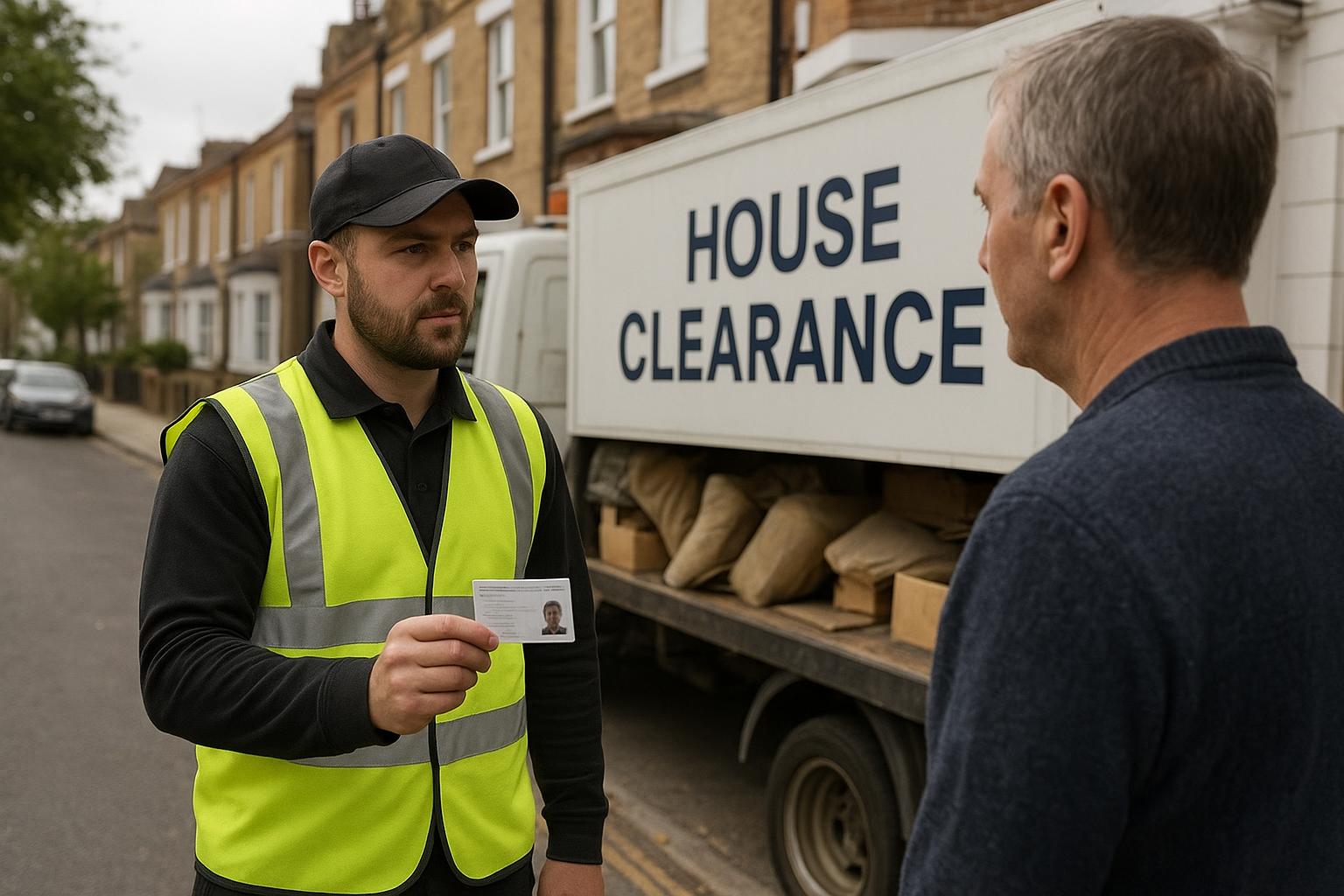
Why fly-tipping is a homeowner problem too, not just the carrier's
It's tempting to assume that if someone you paid to take your old furniture away turns out to be unlicensed and dumps it illegally, that's entirely on them. Under UK waste law, it isn't that clean-cut. There's a legal principle known as "duty of care" for waste, and in practical terms it means that anyone who hands over waste has some responsibility for satisfying themselves that whoever is taking it is a legitimate operator who will dispose of it properly.
If waste is later traced back to your address after being fly-tipped, you can be asked to account for who removed it and what checks you made beforehand. If you can't show that reasonable care was taken in choosing the carrier, you can end up sharing liability for the fly-tipping, even though you weren't the one who dumped anything. Penalties for fly-tipping and related waste offences can be significant, though the exact amount varies case by case and is set by the enforcing authority or the courts rather than being a fixed figure - the point that matters for a homeowner is that liability can extend beyond the person who physically dumped the waste, back to whoever handed it over without checking.
This isn't intended to be alarming. The large majority of clearance jobs go through properly run, licensed carriers without any issue. But it's exactly why asking "is this carrier licensed" before a job goes ahead is a genuinely useful question, not a box-ticking formality. See our page on responsible disposal for how properly licensed carriers are expected to handle waste once it leaves your property.
How to check a carrier is licensed before you book
The good news is that you don't have to take anyone's word for it. The Environment Agency keeps a public register of registered waste carriers that anyone can search, free of charge, by licence number or by company name. The register shows whether a given registration is currently valid, which is the detail that actually matters - a carrier can have once held a licence that has since lapsed or been revoked.
In practice, this means it's entirely reasonable to ask any carrier for their waste carrier licence number before confirming a booking, regardless of whether you found them through a carrier network, a local advert, or a recommendation from a neighbour. A carrier operating properly should be able to provide that number without hesitation, since it's public information anyway. Checking it against the register typically takes a couple of minutes and removes any doubt before your waste actually leaves the property. Our waste carrier licence check page walks through exactly how to search the register and what a valid result looks like.
A few practical signs are also worth watching for. A carrier who can't or won't give a licence number when asked, who asks for cash-only payment with no paperwork at all, or who is vague about where the waste will actually end up, is a carrier worth being cautious about - regardless of how competitive their price looks.
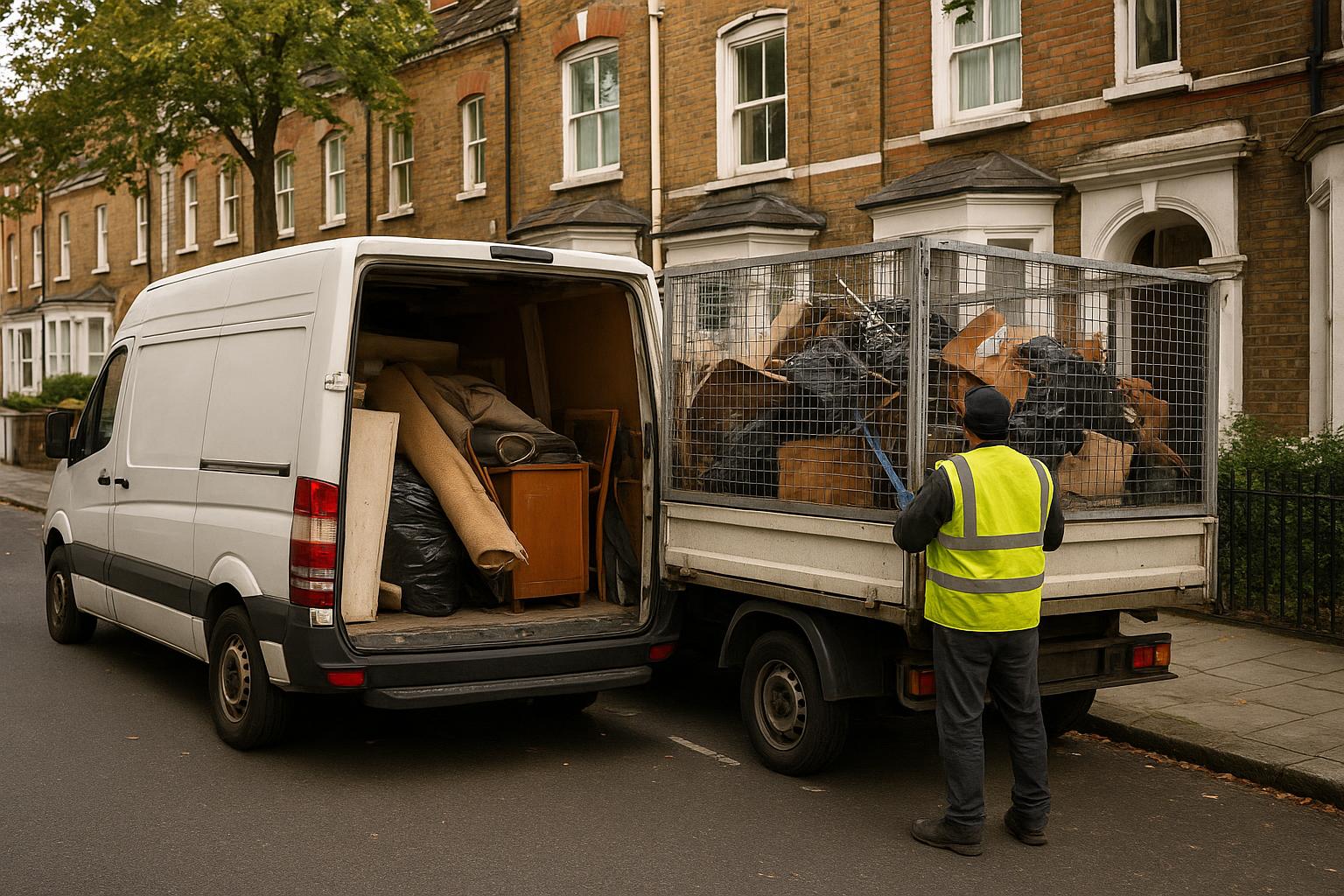
Why the cheapest quote can be the most expensive mistake
Unlicensed operators can often undercut properly registered carriers on price, partly because they're skipping the costs that come with legitimate waste transfer - proper disposal fees, insurance, and the overheads of running a compliant business. A quote that looks unusually low compared to others you've received is worth a second look, not an automatic yes. The saving on the day can turn into a much larger cost later if that waste is fly-tipped and traced back to you.
This is also where it helps to think about who you're actually booking. A carrier who owns their own commercial vehicle, holds insurance, and has an upper-tier registration in their business name has made a real investment in operating legitimately - and has more to lose by cutting corners than someone working entirely off-the-books. See our page on insurance and safety for what cover a properly run carrier should have in place, and our prices page for how legitimate pricing is typically structured, so you've got a realistic baseline to compare an unusually cheap quote against.
It's worth remembering that a legitimate carrier's price isn't just covering the van and the labour on the day. It's also covering where the waste actually goes afterwards - weighbridge and transfer station fees, recycling and landfill gate charges, and the insurance that protects you if something goes wrong on your property during the job. An unusually low quote has to be cutting one of those costs somewhere, and the most common place is exactly the part that matters most to you as the homeowner: what happens to the waste once it's out of sight.
What actually happens when fly-tipped waste is traced
Local councils and the Environment Agency investigate fly-tipping by searching dumped waste for anything that identifies where it came from - an envelope, a delivery label, paperwork, or any other item that links the load back to an address. This is a routine part of how fly-tipping enforcement works in England, and it's the reason a homeowner can end up being contacted about waste they never personally dumped: their name was findable in someone else's illegally dumped load.
Once a council or the Environment Agency has a lead on whose waste it was, the homeowner or occupier is typically the first person contacted and asked to explain what happened to it - who took it away, and what checks were made before handing it over. This is where duty of care becomes a practical question rather than an abstract legal principle: being able to produce a carrier's name, company, and licence number is the difference between a short conversation and a drawn-out investigation.
- Enforcement can include fixed penalty notices for waste duty-of-care breaches, which councils and the Environment Agency are able to issue without going to court first.
- More serious or repeated cases can be referred for prosecution, where penalties are set by the court based on the specifics of the case.
- Separately from any penalty, a landowner (which can include a homeowner, in some circumstances) can also be asked to cover the cost of clearing fly-tipped waste from private land.
None of this is designed to catch people out who've acted reasonably. The consistent theme across enforcement guidance is that taking reasonable care when choosing who removes your waste - and being able to show what that care looked like - is what the rules are actually asking for.
Keeping a record, and for how long
Duty-of-care paperwork doesn't need to be complicated, but it does need to exist somewhere you can find it again if a question comes up months later. A simple, low-effort approach most homeowners can manage:
- Take a photo or screenshot of the carrier's licence number and the Environment Agency register result showing it was valid on the day you checked.
- Keep any invoice, receipt or booking confirmation that names the company and the date of collection.
- Note down the vehicle registration if you can, especially for a larger job - it's another detail that can help trace a booking back if it's ever needed.
- Store it somewhere you'll actually find it again - an email folder or a photos album works better than a scrap of paper that gets thrown out with the next clear-out.
There's no single legally mandated retention period for this kind of personal record-keeping, but keeping it for at least a year or two after a clearance is a sensible, low-effort precaution given how straightforward it is to do at the time - far less hassle than trying to reconstruct who you booked and when, months after the fact, if a question ever does come up.
How a marketplace like houseclearance.co fits into this
It's also worth remembering that duty of care doesn't stop mattering just because a job is arranged through a marketplace rather than a carrier found independently. The same check - a valid licence number, confirmed on the public register - applies regardless of how you found the carrier taking your waste away, and it's worth doing it yourself rather than assuming it's been handled for you somewhere upstream.
It's worth being clear about what houseclearance.co actually is. houseclearance.co is a carrier network, not a clearance company with its own crew or vans. When you submit a job request, houseclearance.co does not send anyone to your property itself - instead, staff review the job details and pass them on to independent, vetted waste-carrier businesses who are expected to hold a valid licence, and those carriers then contact you directly to quote on and carry out the actual clearance. You can read the full process on our how it works page.
Holding a valid upper-tier Environment Agency waste carrier registration (or the Scotland, Wales, or Northern Ireland equivalent) is expected as a baseline condition for any carrier taking part in this network. It's worth being upfront that houseclearance.co does not yet have a live network of independently verified, onboarded carriers - but the licensing standard described here is the one that will apply once real carriers are onboarded. In the meantime, the same advice given earlier in this article still applies to anyone booking a clearance through any route: check the licence number against the public register yourself rather than relying on a single source, including this one.
If you run a licensed, insured clearance business and want to be considered as a carrier once onboarding begins, details are on our work with us page. Licensing matters just as much for other kinds of job, from builders and renovation waste clearance, where volumes and material types raise the stakes, to commercial and retail clearance, where a business itself can be the one answering to a council if waste is handled badly.

A simple pre-booking checklist
Before agreeing to a house clearance with any carrier, it's worth working through a short list of checks:
- Ask for the carrier's waste carrier licence number directly, and expect it to be given without hesitation.
- Search the Environment Agency's public register to confirm the registration is valid and current, not just that a number was quoted.
- Ask where the waste will be taken - a licensed carrier should be able to describe a proper disposal or recycling route.
- Be cautious of prices that are dramatically lower than every other quote you've received, especially combined with a request for cash only and no paperwork.
- Keep a basic record of who you booked - name, company, and licence number - in case you ever need to show you took reasonable care.
None of this takes long, and it's the kind of groundwork that matters far more if something goes wrong than it costs you in time upfront. For household clearance jobs specifically, our house clearance London page covers what to expect from a properly run job from start to finish. The same checks apply whether you're a homeowner, a landlord working through our end of tenancy clearance guide for landlords, or a letting agent following our guide to arranging clearance between tenancies.
Frequently asked questions
A few questions come up repeatedly about licensing and liability.
What if I didn't know the carrier was unlicensed?
Not knowing doesn't automatically remove responsibility under duty of care - the rules are built around what checks a reasonable person would have made beforehand, not just good intentions at the time. This is exactly why checking the licence number against the public register before booking matters, rather than relying on how professional a carrier looked or sounded.
Does this apply to a one-off clearance, or only ongoing commercial waste?
It applies to household waste too, including a single one-off clearance such as a loft clear-out or an old sofa collection - a one-off job isn't automatically exempt from duty of care just because it's not a regular commercial arrangement.
Can I ask a carrier for proof of licensing in writing?
Yes, and it's a perfectly reasonable, entirely sensible thing to ask for. A legitimately registered carrier has nothing to hide about a number that's already on a public register, so hesitation or refusal to share it is itself a useful signal.
Is a cheap quote always a red flag?
Not always - some carriers are simply more efficient or less busy than others. But a quote that's dramatically below every other quote received is worth a second look rather than an automatic yes, especially alongside other warning signs like cash-only payment or vagueness about where waste will actually be taken.
What should I do if I'm already worried about a past clearance?
Pull together whatever records you do have - an invoice, a name, a phone number, anything - and check the Environment Agency register for that carrier now. Having at least made the check, even after the fact, is better than having nothing to show if a question ever comes up, and it's a five-minute task that costs nothing to do today rather than putting it off.
Who is liable for fly-tipping?
If waste is fly-tipped on your own land, you're generally responsible for clearing it and disposing of it properly, even if you didn't dump it there yourself. If you hand waste to someone else who then fly-tips it, you can also be held liable if you didn't check they were a registered waste carrier - which is why asking to see a carrier's licence matters.
What does a waste carrier licence cover?
A waste carrier registration (sometimes called a licence) permits a business to legally transport waste produced by others. It doesn't specify what can be disposed of or where - carriers still need to use licensed disposal sites and issue proper waste transfer documentation for each job.
Do you pay VAT on a waste carrier's licence?
Waste carrier registration in England is handled by the Environment Agency, with a standard registration fee and a separate renewal fee for upper-tier carriers every three years - current fees are published on GOV.UK and are worth checking directly, as they're updated from time to time.
What are the new laws related to fly-tipping in the UK?
Fly-tipping law and enforcement powers are reviewed periodically, and specific rules can change - for the current legal position and any recent updates, GOV.UK and your local council's website are the most reliable sources to check.
Ready to get started?
Post your clearance job so vetted, licensed carriers in your area can quote on it directly.